
Retail Inventory Management System
Your health is our top priority. Schedule an appointment with us today.

Project Overview —
When a fast-growing kids’ clothing brand with five retail outlets across the United States began facing challenges in tracking its fast-moving inventory, RAAS Cloud was brought in to design and build a custom retail inventory management platform from the ground up.
The brand imported its merchandise from multiple countries and distributed stock across regional warehouses and retail stores. Their existing spreadsheets and standalone POS tools couldn’t handle stock synchronization, transfer tracking, or forecasting accurately leading to stockouts in some stores and overstocking in others.
RAAS Cloud’s goal was to build a centralized, cloud-based inventory system that could bring complete visibility across all outlets, automate restocking processes, and integrate smoothly with their existing sales, purchasing, and logistics operations all supported by a modern UI/UX, scalable architecture, and intelligent automation.
Challenges Faced By The Client —
The client’s retail model was complex, spanning imports, multi-location warehousing, and fast seasonal changes in product demand. Managing these operations through basic POS tools and manual updates was inefficient and error-prone.
Some of the key challenges included:
- Lack of Real-Time Stock Visibility: Store managers couldn’t track stock levels across all outlets and warehouses simultaneously.
- Manual Stock Transfers: Movement of products between stores required manual updates, causing discrepancies in counts.
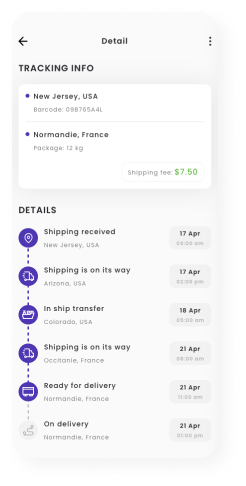
- Import & Distribution Complexity: Imported goods passed through multiple checkpoints before reaching stores, with no centralized tracking.

- Inconsistent Reporting: Each outlet maintained separate systems, resulting in delays and mismatched data.
- Seasonal Demand Volatility: Popular SKUs sold out quickly without predictive restocking.
- Limited Scalability: The existing system couldn’t support growth as new stores were planned across other states.
Retail Inventory Management System Overview —
The project involved end-to-end development from user experience design to system architecture, deployment, and scaling. The platform was developed to manage procurement, warehouse transfers, in-store sales, and online order synchronization through a cloud-native solution accessible by both retail and head-office teams.
Inventory Control Panel
Real-time view of stock levels, SKU tracking, and warehouse-to-store distribution.
Procurement & Imports
Track inbound shipments, purchase orders, customs clearance, and supplier performance.
Warehouse Management
Manage stock receipts, transfers, batch management, and location-based tracking.
Retail POS Integration
Seamless connection with existing store POS systems for automatic stock updates after every sale.
Demand Forecasting Engine
AI-based module for predicting reorder levels based on historical sales and seasonal trends.
Analytics & Reporting
Consolidated dashboards showing sales velocity, stock aging, margins, and outlet performance.
User Role Management
Separate access levels for store managers, warehouse staff, and head-office administrators.
- Unified dashboard for real-time stock tracking across five outlets and warehouses.
- Automated stock transfer requests and approvals between locations.
- AI-powered reorder alerts based on sales patterns and seasonal demand.
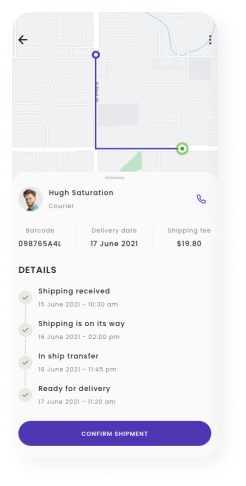
- Integration with import and logistics partners for live shipment tracking.
- Barcode and SKU-based item management for faster scanning and audits.
- Advanced analytics for turnover rate, shrinkage, and sales-to-inventory ratios.
- API integrations with POS, accounting, and ERP systems.
- Custom dashboards and reports for different user roles.
- Responsive, mobile-friendly interface for store-level use.
- Cloud architecture built for high reliability and zero data loss.
Key Features of the Retail Inventory Management System We Developed —
Technology Stack We Used —


How Our Solution Helped the Client —
Centralized Control Across All Stores
The system unified inventory management across all five outlets and warehouses, giving real-time visibility into every SKU’s movement from import to sale.
Reduced Manual Errors and Delays
Automated stock transfers, barcode scanning, and synchronized POS integration eliminated manual entries and mismatched stock counts, reducing administrative workload by over 50%.
Smarter Purchasing and Restocking
The predictive restock engine helped the brand plan orders in advance, cutting down stockouts by 35% during high-demand seasons.
Transparent Import and Distribution Workflow
With import tracking integrated directly into the system, the management team could monitor shipments and distribution timelines, improving efficiency across supply channels.
Actionable Business Intelligence
Built-in analytics offered deep insights into store performance, best-selling categories, and low-turnover products empowering the management team to make faster decisions.
Scalable Infrastructure for Expansion
The cloud-based system was designed for scalability, allowing the client to onboard two new outlets within weeks without additional infrastructure investment.
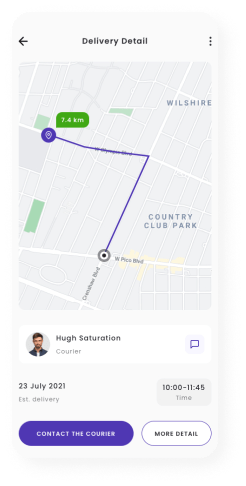
App Screens —
Frequently Asked Questions —
What technology stack was used to build the system?
We used a scalable and modular tech stack to support real-time operations:
- Frontend: React.js for responsive dashboards and mobile-friendly access.
- Backend: Node.js and Express.js for API-driven architecture.
- Database: PostgreSQL for structured data and Redis for real-time caching.
- Cloud Hosting: AWS Elastic Beanstalk and S3 for scalability and storage.
- Integrations: Shopify API, QuickBooks, and barcode scanners for POS sync.
Can the system handle multiple warehouses and regional price variations?
Yes. The platform supports multi-warehouse configurations, allowing the brand to define pricing, tax, and discount rules specific to regions or outlets.
Does it include a supplier or import tracking system?
Absolutely. A dedicated Procurement & Imports module lets the team track supplier POs, shipment timelines, port clearance, and expected delivery all from the same dashboard.
How is data accuracy ensured between stores and head office?
All stock movements and sales are synced through APIs in real time. Data conflicts are automatically flagged, and a reconciliation log ensures transparency between store-level and central data.
Can this platform be extended to eCommerce operations?
Yes. The system is fully API-ready for integration with eCommerce platforms like Shopify or WooCommerce. Inventory automatically updates across both offline and online channels.
How long did it take to design and deploy the system?
The complete lifecycle from UX design to deployment and testing was completed in 80 days, including API integration with POS systems and logistics providers.
Want a Similar Project for Your Business? —
This Retail Inventory Management System showcases how RAAS Cloud empowers retail brands to control, scale, and streamline their operations through technology.
If you’re planning to upgrade your retail or multi-outlet management systems, here’s how to begin:
- Fill in the Form: Tell us about your retail operations and challenges.
- Share Your Requirements: Describe your store count, data flow, and integrations.
- Get a Quote: Receive a clear proposal and timeline based on your business size.
Let’s build a robust, scalable, and intelligent inventory management system for your retail network.