
Restaurants are using AI for much more than chatbots and self-ordering kiosks. Today, it helps predict demand, manage inventory, reduce food waste, automate routine tasks, and improve customer experiences. As a result, AI adoption is growing rapidly across the restaurant industry.
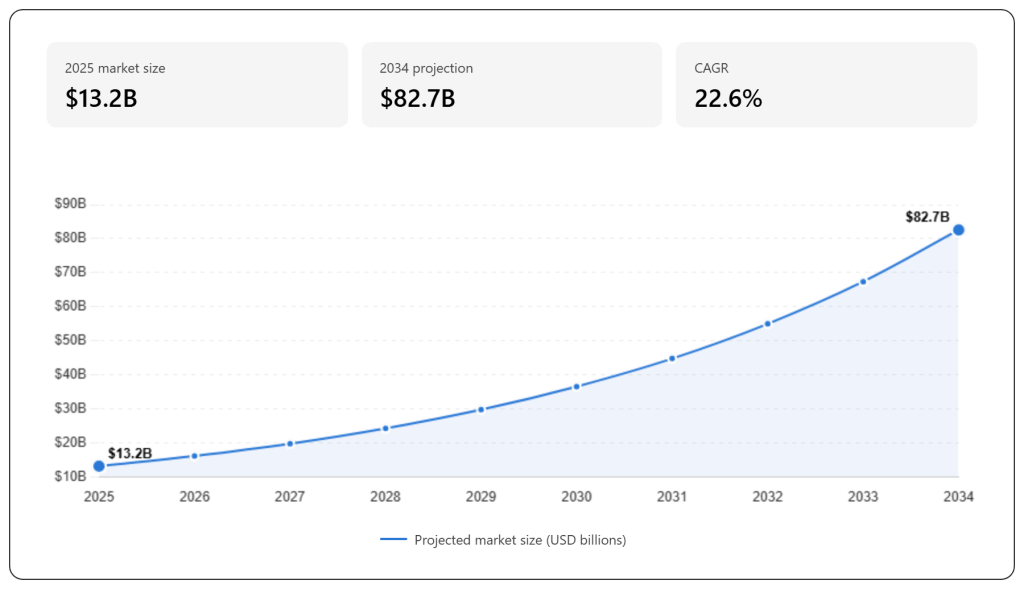
In fact, the global AI in restaurants market is projected to grow from $13.2 billion in 2025 to $82.7 billion by 2034, at a CAGR of 22.6%.
With so many platforms now available, choosing the right one is not easy. To help you decide, we have compared the 10 best AI tools for the restaurant industry based on their features, ideal use cases, and overall value.
Best AI Tools For Restaurant Industry at a Glance
- ConverseNow: Best for AI voice ordering and drive-through automation.
- Nory: Best for restaurant operations, forecasting, and labor management.
- Restaurant365: Best for restaurant accounting and back office management.
- SevenRooms: Best for reservations, guest engagement, and CRM.
- Black Box Intelligence: Best for restaurant analytics and performance benchmarking.
- Crunchtime: Best for inventory, labor, and multi-location operations.
- Fourth iQ: Best for AI forecasting, scheduling, and inventory optimization.
- Winnow: Best for AI-powered food waste tracking and reduction.
- Supy: Best for procurement, inventory management, and cost control.
- eatOS: Best for AI-powered all-in-one restaurant management.
Why Restaurants Need Custom AI Development
Off the Shelf AI Does Not Solve Every Challenge
Most AI tools focus on one part of restaurant operations, such as reservations, inventory, or customer support. However, every restaurant has different workflows, menus, POS systems, suppliers, and customer expectations. A custom AI solution connects these systems and automates processes based on how your business actually operates.
AI Built Around Your Restaurant
Custom AI can automate phone ordering, answer customer questions, forecast demand, optimize staffing, recommend inventory purchases, detect food waste, and generate business insights from real time data. Instead of switching between multiple platforms, your team works with one AI system designed specifically for your restaurant.
Grow Without Increasing Costs
As your business expands to multiple locations, custom AI scales with it. You can automate repetitive work, improve order accuracy, reduce operational costs, and give managers better visibility across every branch.
Build Custom Restaurant AI Solutions with RAAS Cloud
Every restaurant has unique workflows, and off the shelf AI cannot solve every challenge. RAAS Cloud builds custom AI solutions for restaurants, including AI ordering, chatbots, demand forecasting, inventory management, staff scheduling, and business automation.
With 60+ projects delivered, 40+ happy clients, and a team of 50+ experts, we develop scalable AI solutions that integrate with your existing restaurant systems and grow with your business. Check our recent case studies to see our work impact:
👉 Explore Our Artificial Intelligence Consulting Services (60+ Successful Projects)
Case Study: Cloud Based Hotel Management Platform
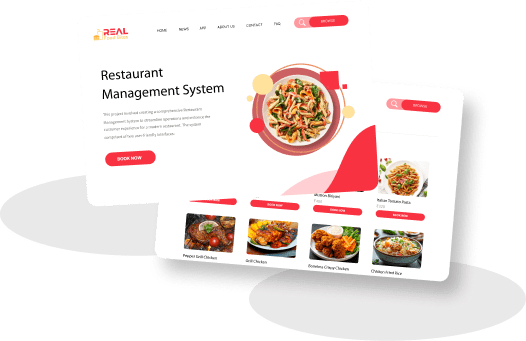
RAAS Cloud developed a scalable hotel management platform for a leading US hotel chain managing multiple branches. The solution centralized operations, automated room, guest, inventory, POS, HR, and financial management, while providing role based access, real time reporting, and cloud scalability to support future business growth.
Case Study: AI Customer Support Chatbot
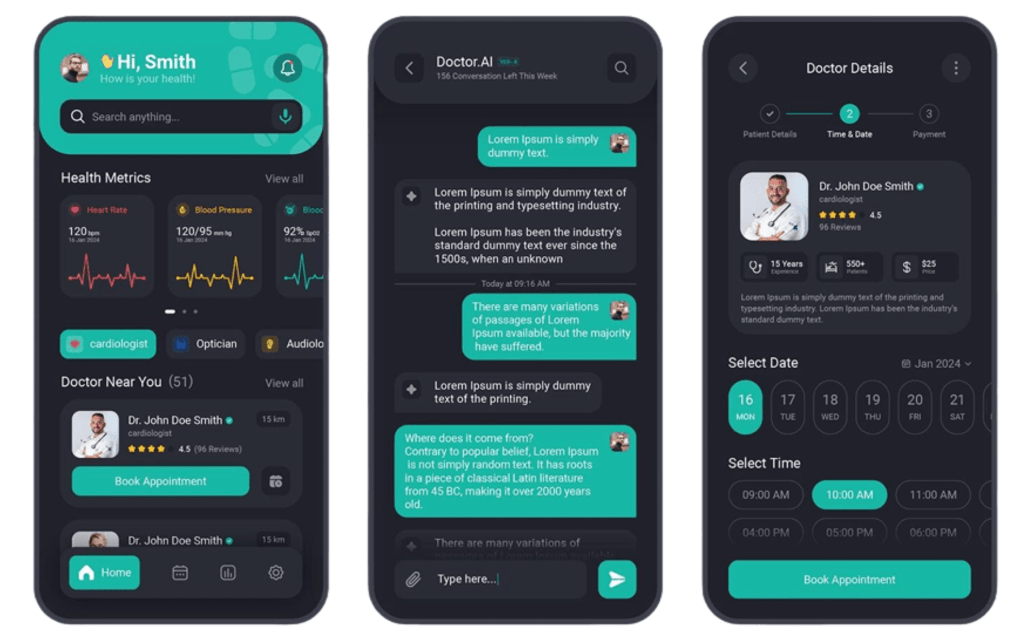
RAAS Cloud built an AI powered customer support chatbot for a healthcare organization that automated 70% of customer conversations.
The chatbot handled appointment scheduling, billing, multilingual support, and CRM integration while reducing response times from over two minutes to under ten seconds and maintaining secure, compliant interactions.
1. ConverseNow
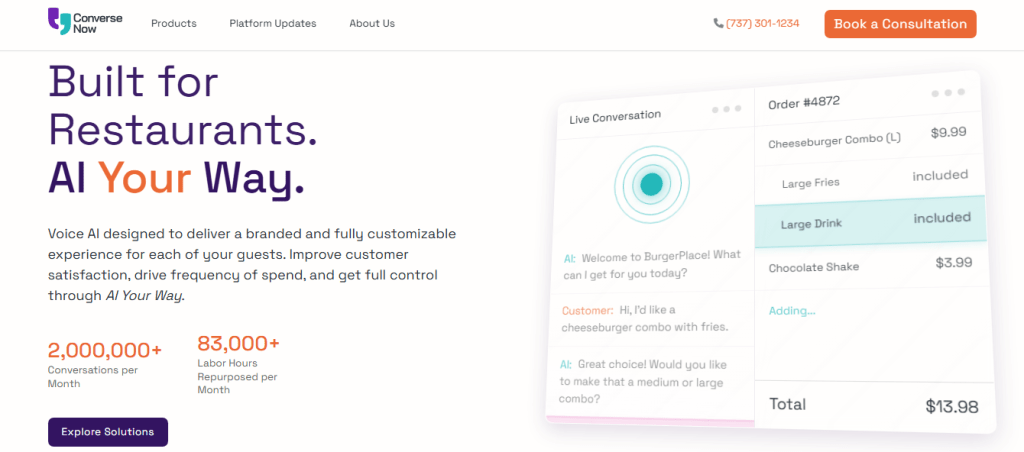
ConverseNow helps restaurants automate phone orders, drive-thru interactions, and customer service conversations with AI-powered voice technology. Vinay Shukla and Rahul Aggarwal launched the company in 2018 to solve ordering and staffing challenges in the restaurant industry.
Since then, ConverseNow has grown into a leading restaurant AI platform, managing more than 2 million customer conversations every month. The company expanded its capabilities through strategic investments, strengthened its drive-thru technology with the 2024 acquisition of ValyantAI, and established itself as a leader in generative AI-powered restaurant automation by 2025.
Restaurants use ConverseNow to improve order accuracy, increase efficiency, and deliver consistent guest experiences across multiple ordering channels.
Standout features
- Phone Order AI: ConverseNow answers restaurant phone calls 24/7 and takes customer orders with more than 95% accuracy.
- Drive Thru Automation: The platform manages drive-thru orders in real time, helping restaurants reduce wait times and serve more customers during peak hours.
- AI Your Way Customization: Restaurants can customize menus, workflows, promotions, AI behavior, and ordering processes to match their operational needs.
- Brand-Specific Voice AI: The AI speaks in a tone and style that reflects each restaurant’s brand personality and customer experience standards.
- Multilingual Ordering Support: Customers can place orders in their preferred language, helping restaurants serve diverse audiences more effectively.
- Smart Upselling Engine: The platform recommends relevant upgrades, add-ons, and promotions based on order size, customer behavior, and business goals.
- SMS AI Conversations: Customers can order food, receive updates, and interact with restaurants through intelligent text messaging.
- Order Injection API: Restaurants can integrate AI-powered ordering directly into mobile apps, kiosks, and digital ordering channels.
- Real Time Analytics and Insights: Managers can track order performance, customer satisfaction, AI effectiveness, and operational trends through detailed reporting.
- POS and Restaurant System Integrations: ConverseNow connects with leading restaurant platforms to ensure smooth order processing and operational workflows.
- Continuous AI Learning: The AI improves its performance over time by learning from customer interactions and restaurant feedback.
- Enterprise Scale Performance: The platform manages more than 2 million customer conversations each month and helps restaurants repurpose over 83,000 labor hours monthly.
2. Nory
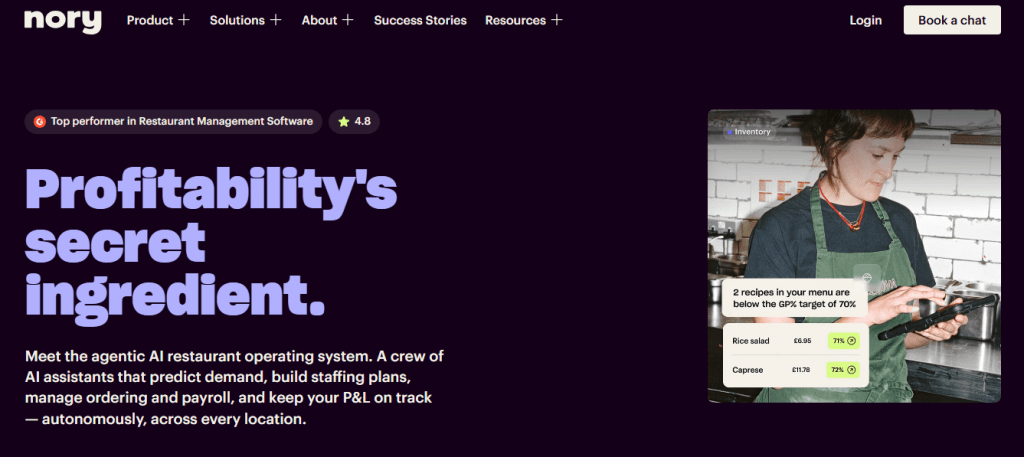
Nory helps restaurant operators turn complex operational data into profitable decisions through AI-powered forecasting, workforce planning, inventory management, and payroll automation. The platform brings sales, labor, inventory, and financial performance into a single operating system, helping hospitality businesses reduce waste, control costs, and improve margins across every location.
Restaurant entrepreneur Conor Sheridan launched Nory in 2021 after identifying the operational challenges that limit restaurant profitability and growth. Since then, the company has expanded across the hospitality sector, serving more than 800 restaurant partners and raising $37 million in Series B funding in 2025 to accelerate the development of its agentic AI platform for restaurant operations.
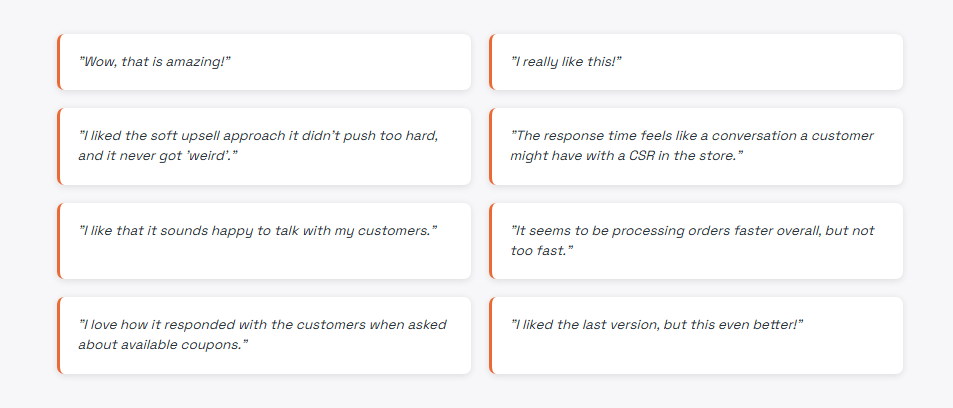
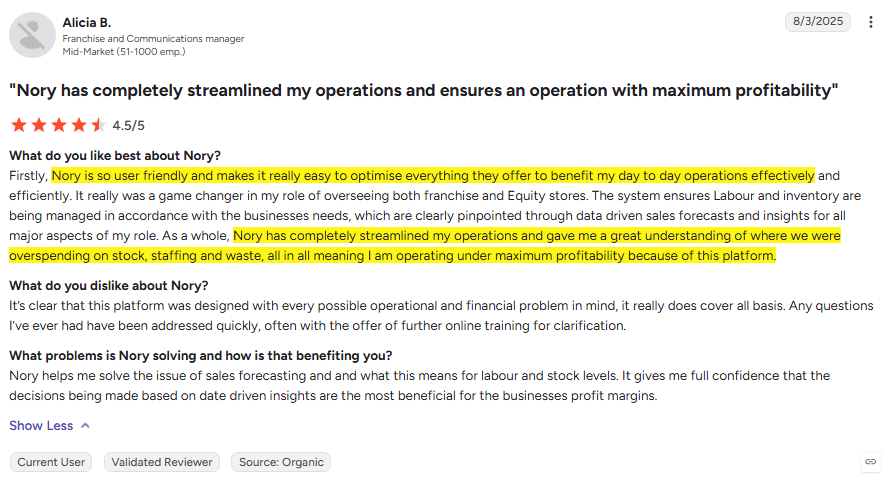
Users frequently praise Nory for its intuitive interface, forecasting accuracy, and operational visibility, although some reviews mention occasional mobile app lag and limitations in advanced reporting features.
Standout features
- AI-Powered Demand Forecasting – Predicts future sales trends and customer demand to improve planning accuracy across restaurant operations.
- Real Time Business Intelligence – Consolidates sales, labor, inventory, and profitability data into a single dashboard for faster decision making.
- Inventory and Stock Control – Tracks inventory levels, supplier orders, and stock usage to reduce waste and prevent shortages.
- Automated Workforce Scheduling – Creates staffing plans based on forecasted demand to optimize labor allocation and control costs.
- AI Driven Operational Recommendations – Analyzes restaurant data and suggests actions that improve efficiency and profitability.
- Payroll Automation – Simplifies payroll calculations, employee payments, and workforce administration from one platform.
- Multi Location Management – Provides centralized visibility into performance, costs, and operations across multiple restaurant locations.
- Food Waste Reduction Analytics – Identifies waste patterns and helps teams make smarter purchasing and inventory decisions.
- Labor Cost Monitoring – Tracks labor performance against sales forecasts to maintain optimal staffing levels.
- Profitability Tracking – Monitors key metrics, including food and labor costs, gross profit, and operating margins, in real time.
- Integrated Restaurant Ecosystem – Connects with POS, accounting, payroll, and supply chain systems to eliminate manual data entry.
- AI-Powered Performance Insights – Highlights trends, anomalies, and opportunities that help operators improve restaurant performance.
- Centralized Operations Dashboard – Gives managers a single source of truth for sales, staffing, inventory, and financial data.
3. Restaurant365
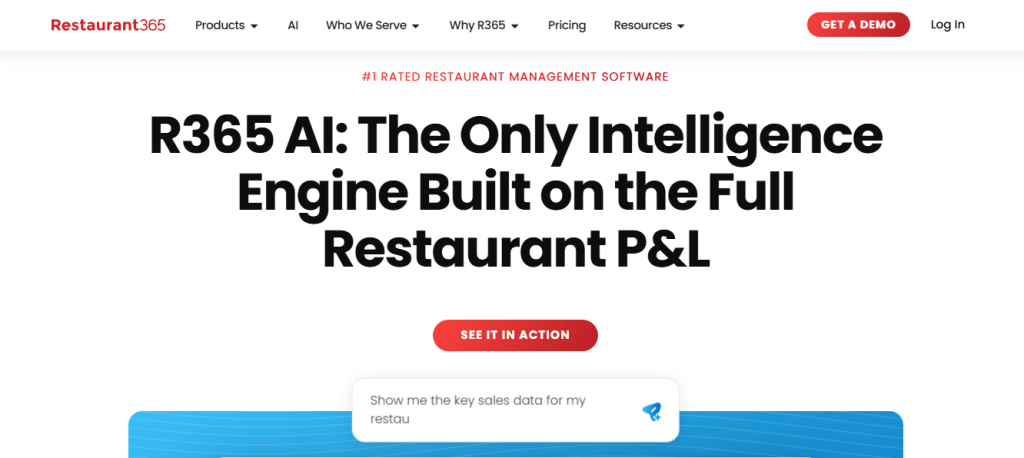
Restaurant365 (R365) serves as the operational backbone for restaurant groups that need tighter control over finances, labor, and inventory. The platform connects accounting, payroll, workforce management, purchasing, and sales data into a single system, giving operators a complete view of restaurant performance.
More than 52,000 restaurant locations rely on R365 to track costs, identify profit leaks, and streamline back office operations. The company’s latest innovation, R365 AI, analyzes data across the entire profit and loss statement to uncover cost variances, automate routine tasks, and help operators make faster decisions that improve restaurant profitability.
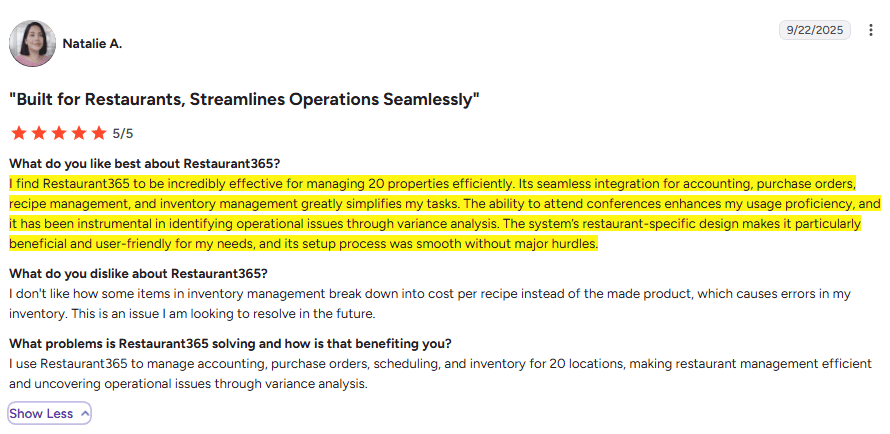
Some teams note that the platform requires time to learn due to its broad functionality, but many view that complexity as a tradeoff for the depth of control and visibility it provides.
Standout features
- AI-Powered P&L Intelligence – Connects sales, food costs, labor expenses, payroll, and accounting data to provide a complete view of restaurant profitability.
- AI Advisor – Answers operational and financial questions using natural language, eliminating the need to build complex reports.
- Smart Inventory Management – Monitors inventory levels, purchasing activity, recipe costs, and food waste in real time.
- Food Cost Variance Tracking – Identifies pricing changes, waste, and inventory discrepancies before they impact margins.
- AI Driven Purchasing Recommendations – Uses demand forecasts and inventory data to suggest smarter purchasing decisions.
- Restaurant Accounting Suite – Automates invoice processing, reconciliations, financial reporting, and multi-location accounting workflows.
- Sales Forecasting Engine – Predicts future sales trends to support better labor planning and operational decisions.
- AI Assisted Employee Scheduling – Generates optimized schedules based on sales forecasts, labor targets, employee availability, and business rules.
- Labor Cost Monitoring – Tracks scheduled versus actual labor costs and alerts managers when spending exceeds targets.
- Payroll and Compliance Management – Automates payroll processing, tip calculations, tax management, and workforce compliance tasks.
- Multi Location Performance Tracking – Gives restaurant groups a centralized view of operational and financial performance across all locations.
- Real Time Restaurant Dashboards – Displays key metrics such as revenue, labor costs, inventory usage, and profit margins in one place.
- Mobile Restaurant Management – Allows managers to monitor operations, labor, inventory, and team performance from any location.
- Extensive Integration Network – Connects with POS systems, vendors, payroll providers, accounting tools, and hundreds of restaurant technology platforms.
4. SevenRooms
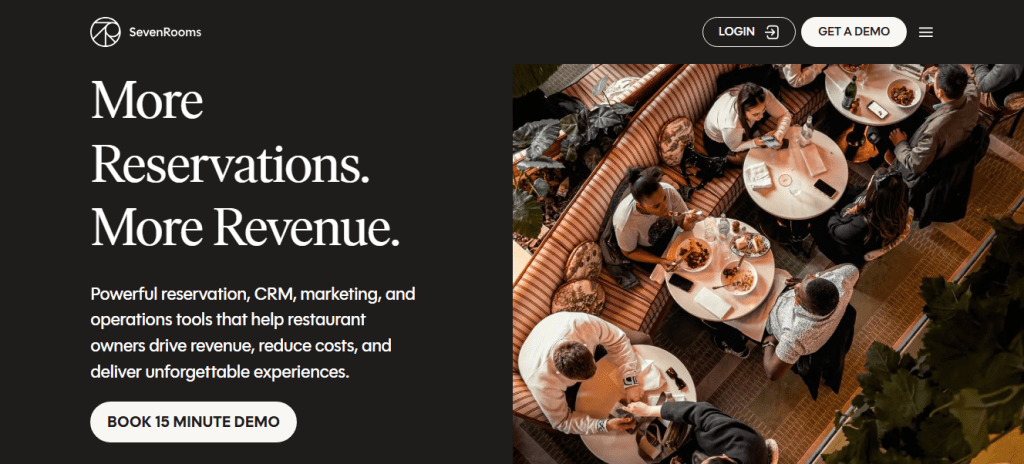
SevenRooms helps restaurants build stronger guest relationships and turn more first-time visitors into repeat customers. The platform combines reservations, guest profiles, marketing automation, table management, and loyalty tools into a single system, making it easier for operators to deliver personalized experiences at scale.
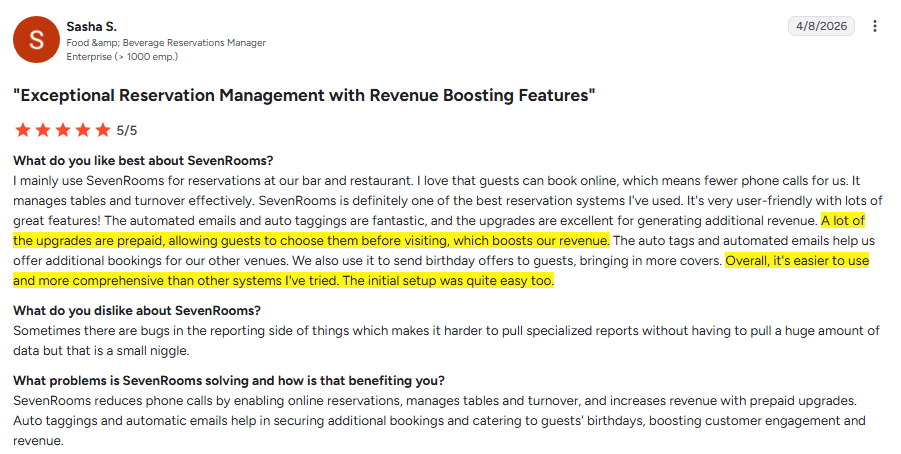
Restaurants use SevenRooms to increase direct bookings, reduce dependence on third-party channels, and create targeted campaigns based on guest preferences and dining behavior. Many operators report stronger guest engagement and higher revenue from automated marketing efforts. However, restaurants with limited customer data may need time to take full advantage of the platform’s advanced personalization features.
Standout features
- Reservation Management – Accepts and manages reservations from websites, Google, Instagram, Yelp, DoorDash Reservations, and other booking channels through a centralized system.
- Restaurant CRM – Creates unified guest profiles by collecting reservation history, dining preferences, spending behavior, and feedback data.
- Marketing Automation – Automates email and SMS campaigns to increase repeat visits and drive guest retention.
- Guest Segmentation – Groups diners based on preferences, visit frequency, spending patterns, and engagement history for targeted marketing.
- AI-Powered Table Management – Optimizes seating arrangements, table turns, waitlists, and pacing to improve front-of-house efficiency.
- Voice AI for Reservations – Handles reservation calls automatically and helps restaurants capture more bookings without additional staff.
- Waitlist Automation – Streamlines guest waitlists with automated notifications and seating management tools.
- Loyalty and Guest Retention Tools – Encourages repeat business through personalized offers, rewards, and guest recognition programs.
- Reputation Management – Consolidates guest feedback and online reviews into a single dashboard for monitoring customer sentiment.
- Event and Experience Management – Supports ticketed events, special dining experiences, reservation add-ons, and promotional packages.
- Revenue Management Tools – Uses guest data and reservation insights to increase table utilization and average guest spend.
- Multi-Location Guest Profiles – Shares guest data across restaurant groups to create consistent experiences across multiple venues.
- Email and SMS Marketing – Delivers personalized promotions, event invitations, and special occasion campaigns automatically.
- POS and Third Party Integrations – Connects with restaurant technology systems to centralize guest, reservation, and operational data.
5. Black Box Intelligence
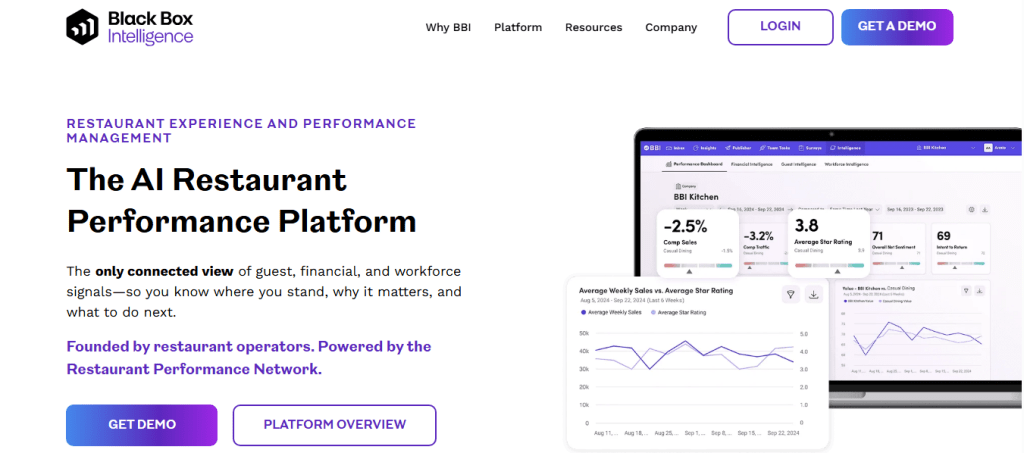
Black Box Intelligence approaches restaurant AI from a unique angle. While most platforms focus on operations inside a restaurant, Black Box Intelligence helps operators understand how their performance compares with the wider industry.
Restaurant operators established the company in 1995 and spent more than 30 years building one of the restaurant industry’s largest benchmarking networks. Today, its AI-powered platform combines guest sentiment, workforce metrics, financial performance, surveys, reviews, and market benchmarks into a single intelligence layer.
Restaurant-trained AI analyzes millions of guest interactions to help brands identify the drivers of sales, traffic, loyalty, and operational performance. Large restaurant groups often rely on the platform for market context and benchmarking insights that many traditional restaurant management systems cannot provide.
Standout features
- Restaurant Trained AI Analytics – Analyzes guest reviews, surveys, and social media feedback using AI models trained specifically on restaurant data.
- Guest Intelligence Platform – Combines surveys, reviews, guest feedback, and sentiment analysis into a unified experience management system.
- AI-Powered Sentiment Analysis – Identifies recurring guest experience themes and highlights issues that require immediate attention.
- Performance Intelligence Dashboard – Connects guest, workforce, and financial metrics to provide a complete view of restaurant performance.
- Restaurant AI Command Center – Prioritizes operational improvements based on their potential impact on traffic, sales, and guest satisfaction.
- AI Generated Review Responses – Creates personalized responses to guest reviews across multiple locations and channels.
- AI Review Boost – Encourages satisfied guests to share feedback on public review platforms through automated prompts.
- Menu Level Survey Analytics – Captures feedback on specific menu items, helping operators understand product performance and customer preferences.
- Restaurant Performance Benchmarking – Compares sales, traffic, sentiment, and workforce metrics against industry benchmarks.
- Workforce Intelligence – Tracks turnover, compensation, staffing trends, and employee performance metrics.
- Financial Intelligence Tools – Provides restaurant sales and traffic benchmarks to help operators evaluate business performance.
- Enterprise Survey Management – Supports customizable check-level surveys across multiple restaurant locations.
- POS and Loyalty Integrations – Connects guest feedback directly to transactions, menu items, loyalty programs, and customer segments.
- Multi-Location Performance Monitoring – Gives restaurant groups centralized visibility into guest experience and operational performance across all locations.
6. Crunchtime
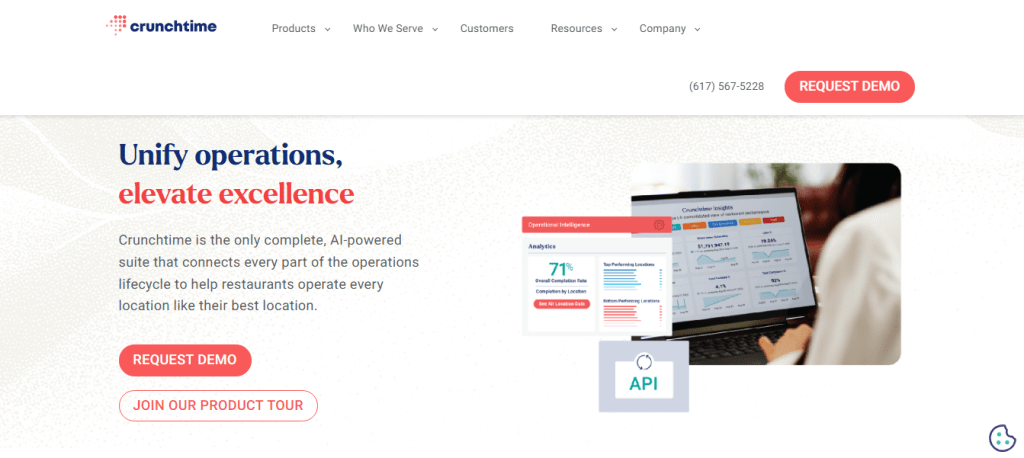
Crunchtime helps multi-unit restaurant brands solve one of the industry’s hardest challenges, which is delivering the same operational standards across hundreds or even thousands of locations. The platform combines inventory management, labor scheduling, kitchen operations, food safety, compliance, forecasting, and task execution into a single system designed for restaurant operations.
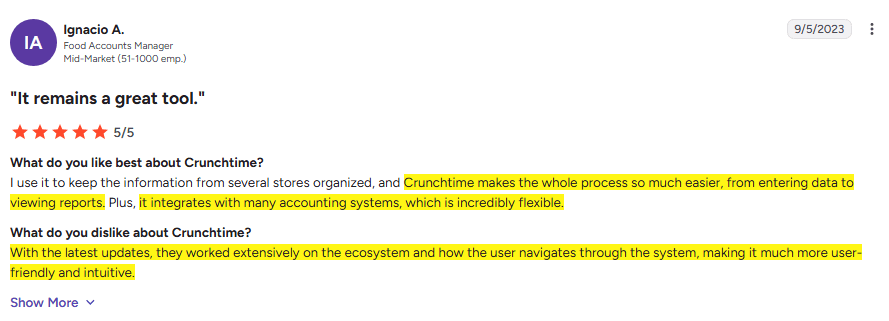
More than 850 restaurant brands across 150,000 locations use Crunchtime to standardize processes, reduce food and labor costs, and improve operational visibility. Restaurant operators often value the platform’s ability to consolidate multiple operational tools into one environment. However, smaller restaurant groups may not require the extensive enterprise-level capabilities that make Crunchtime popular among large brands.
Standout features
- Operational Intelligence – Combines sales, labor, inventory, compliance, and training data to provide a real-time view of restaurant performance.
- AI-Powered Sales Forecasting – Predicts demand patterns to support better purchasing, staffing, and operational planning decisions.
- Inventory Management – Manages inventory counts, purchasing, reconciliation, and food cost tracking from a centralized platform.
- Food Cost Management – Identifies food cost variances and helps operators reduce waste and improve profitability.
- Labor and Scheduling Automation – Creates optimized schedules based on forecasted demand while helping managers control labor costs.
- Labor Law Compliance – Automates compliance monitoring to reduce scheduling risks and labor-related violations.
- Operations Execution – Standardizes operational procedures, audits, food safety checks, and corrective actions across all locations.
- Task and Workflow Management – Ensures store teams complete daily operational tasks consistently and on time.
- Kitchen Display System (KDS) – Coordinates kitchen workflows, manages order flow, and improves order accuracy during peak periods.
- Food Safety Monitoring – Supports food safety protocols, temperature tracking, and compliance management.
- Real-Time Multi-Location Visibility – Gives corporate teams instant access to operational performance across every restaurant location.
- Learning and Development Tools – Supports employee training, onboarding, and operational knowledge sharing.
- Enterprise Reporting Dashboards – Tracks food costs, labor expenses, compliance performance, and operational metrics from a single dashboard.
- Extensive Restaurant Integrations – Connects with POS systems, accounting software, HR platforms, payroll providers, and supplier networks.
7. Fourth iQ
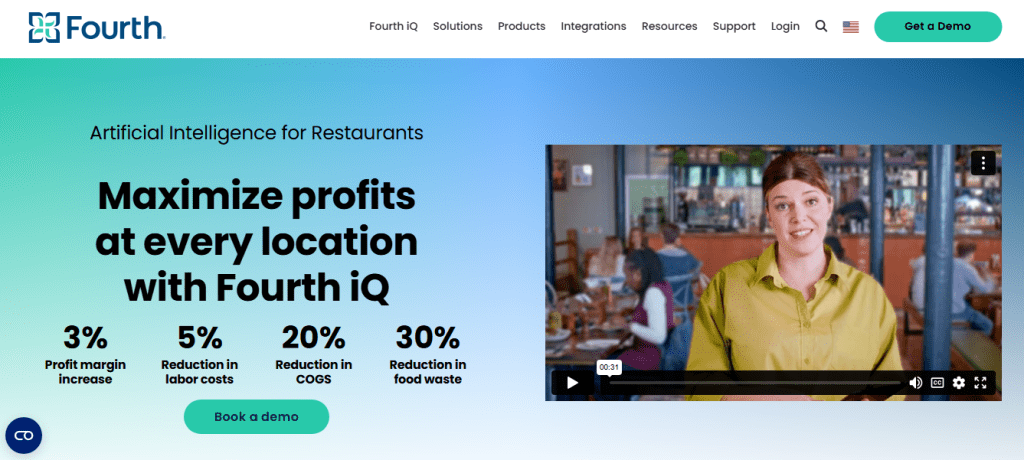
Fourth iQ sits at the center of the Fourth restaurant operations ecosystem, turning thousands of daily data points into practical recommendations for restaurant teams. Every staffing decision, inventory purchase, payroll record, and sales transaction feeds into its AI engine, allowing managers to spot problems before they impact margins.
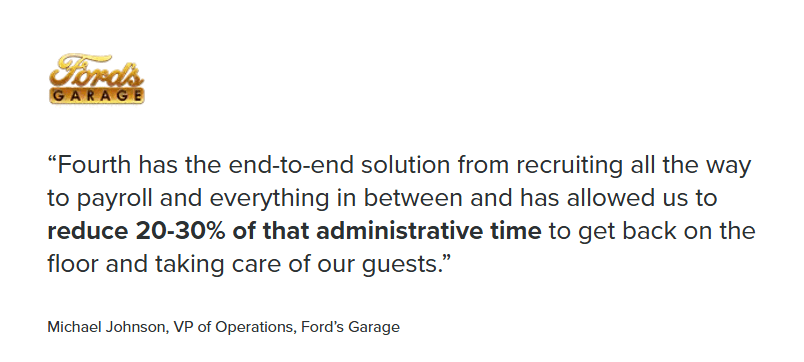
The platform also recommends actions based on forecasted demand instead of simply reporting past performance. Restaurant brands using Fourth iQ have reported up to a 3% increase in profit margins, a 5% reduction in labor costs, a 20% reduction in cost of goods sold, and a 30% reduction in food waste. Global brands such as Pizza Hut, KFC, Taco Bell, Sonic, and Dunkin rely on Fourth iQ to improve operational efficiency across multiple locations.
Standout features
- AI Demand Forecasting – Predicts customer demand with greater accuracy to improve staffing, inventory planning, and purchasing decisions.
- AI-Powered Labor Scheduling – Builds optimized employee schedules that reduce overstaffing, understaffing, and unnecessary labor costs.
- Inventory Intelligence – Tracks inventory levels, purchasing patterns, and food usage to control costs and reduce waste.
- Predictive Operational Insights – Detects operational risks early and recommends corrective actions before they affect restaurant performance.
- iQ for Operations – Provides store managers with real-time guidance, alerts, and next step recommendations during every shift.
- iQ for Head Office – Gives corporate teams visibility into forecast accuracy, operational performance, and business risks across multiple locations.
- Next Best Action Recommendations – Suggests practical actions that improve profitability based on live operational data and AI analysis.
- Scenario Planning Tools – Helps restaurant leaders compare different staffing, inventory, and operational strategies before making decisions.
- Restaurant Performance Dashboards – Brings sales, labor, inventory, and operational metrics together in one centralized dashboard.
- AI-Powered Cost Optimization – Identifies opportunities to lower food costs, labor expenses, and overall cost of goods sold.
- Workforce Management Integration – Connects forecasting with employee scheduling, payroll, and labor management through HotSchedules.
- Multi-Location Performance Monitoring – Tracks operational performance across every restaurant location from a single interface.
- Automated Business Recommendations – Prioritizes high-impact tasks so managers can focus on actions that improve restaurant performance.
- Connected AI Decision Engine – Unifies workforce, inventory, payroll, sales, and operational data to support faster and more informed decision making.
8. Winnow
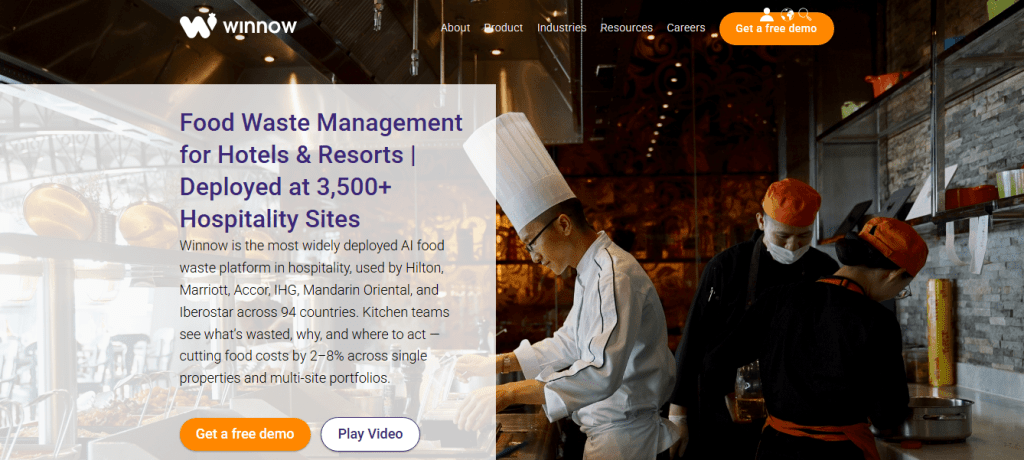
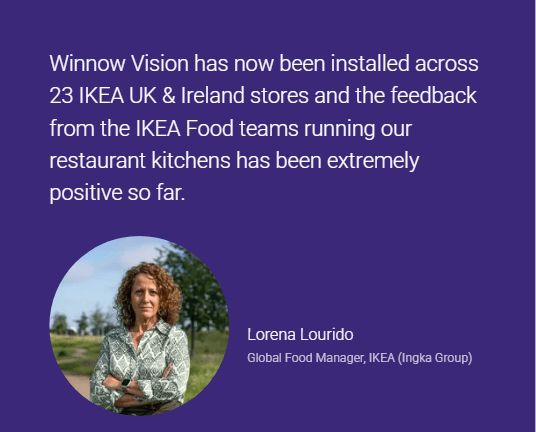
Winnow was founded in 2013 when Marc Zornes and Kevin Duffy set out to help commercial kitchens stop wasting food using AI. The company believes food is too valuable to waste and builds technology that helps chefs turn waste data into daily action. Today, Winnow supports 3,500+ kitchens across 94 countries and has become one of the most recognized food waste platforms in hospitality.
Its AI has learned from 500+ million food-waste images, earned B Corp certification, and ranked #8 on the FoodTech 500 (2024). Users often praise the platform for delivering measurable savings and simple daily insights, while some mention that the hardware investment and onboarding process can be significant for smaller kitchens.
Standout features
- Throw & Go® AI Waste Tracking – Uses computer vision and connected scales to identify, weigh, and record food waste automatically without any manual input from kitchen staff.
- Food Waste Image Recognition – Recognizes more than 1,000 food items using AI trained on over 500 million food waste images for highly accurate waste identification.
- Real Time Waste Analytics – Shows exactly what food gets wasted, why it happens, and how much it costs through easy-to-understand dashboards.
- Multi-Site Performance Dashboard – Winnow Hub lets hotel groups and restaurant chains benchmark locations, compare waste trends, and monitor enterprise-wide performance.
- Cost and Waste Tracking – Calculates the financial impact of wasted food and highlights the biggest cost-saving opportunities for kitchen teams.
- Pre and Post Consumer Waste Monitoring – Tracks food waste across preparation, buffet, service, and plate waste to provide complete kitchen visibility.
- AI-Powered Menu Insights – Identifies dishes that generate excessive waste, enabling chefs to refine recipes, portion sizes, and production planning.
- Cross Property Benchmarking – Compares food waste performance across multiple kitchens to identify best-performing locations and improvement opportunities.
- ESG and Sustainability Reporting – Generates measurable food waste, carbon reduction, and sustainability data that support ESG reporting and corporate sustainability goals.
- Fast Kitchen Deployment – Requires only about 15 minutes of staff training and supports remote rollout across large hospitality groups.
- Multilingual Global Support – Offers platform support and onboarding in more than 20 languages for international hotel and foodservice operators.
- Automated Daily Reports – Delivers daily reports with waste trends, overproduction insights, and recommended actions for continuous improvement.
- Enterprise Food Waste Analytics – Consolidates data from thousands of kitchens into one platform for portfolio-level reporting and operational decision-making.
- Kitchen Performance Coaching – Combines AI insights with expert culinary guidance to help teams reduce waste, improve purchasing decisions, and increase profitability.
9. Supy
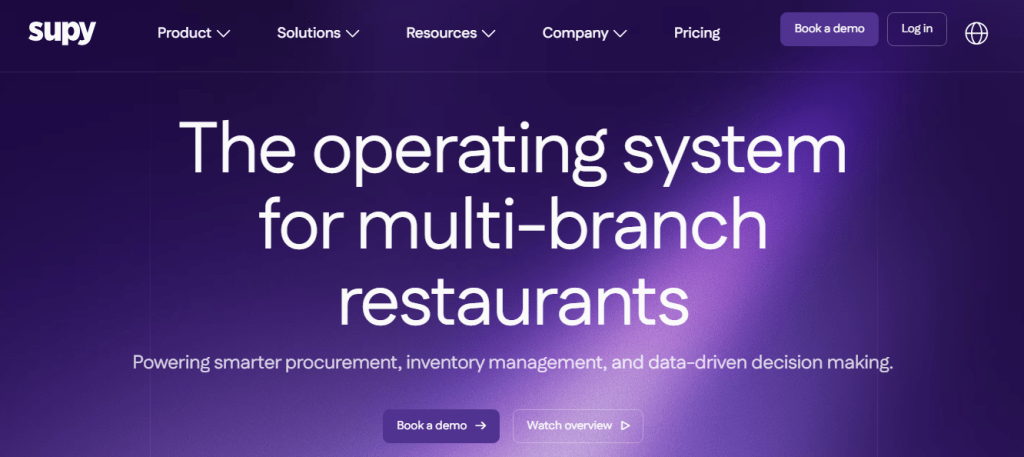
Supy focuses on one area where restaurant profits are often won or lost, which is the back of the house. The platform helps multi-branch restaurant groups replace spreadsheets and disconnected systems with AI-driven procurement, inventory management, supplier control, and business intelligence tools.
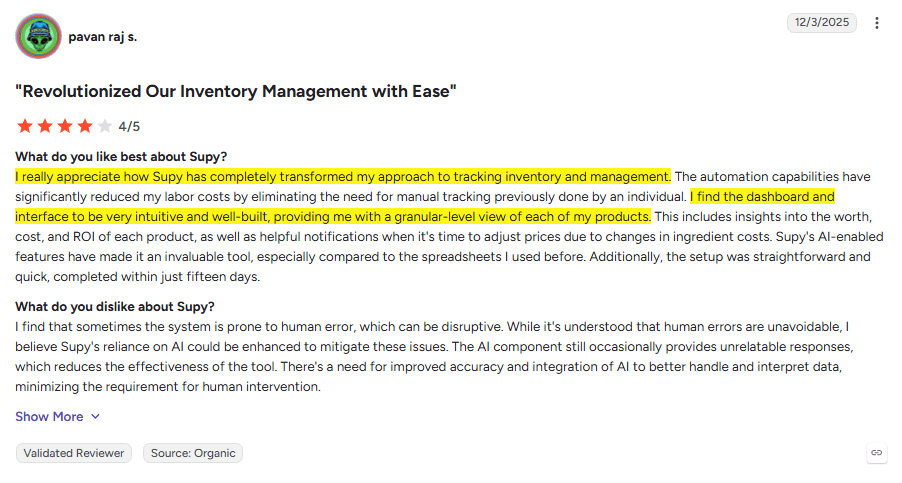
Restaurateur Dani El Zein and software engineer Ibrahim Bou Ncoula developed Supy after facing these operational challenges firsthand. Today, the platform supports 3,500+ restaurants across 40+ countries, integrates with 75+ business systems, and delivers 24/7 global support. Restaurant operators frequently mention its intuitive workflows and responsive support team, while some note that setting up advanced approval rules and integrations requires careful planning.
Standout features
- AI Predictive Ordering – Recommends purchase quantities based on sales forecasts, stock levels, supplier schedules, and inventory coverage periods.
- End-to-End Procurement – Manages requisitions, purchase orders, approvals, supplier communication, and central kitchen ordering from one platform.
- Inventory Management – Tracks stock movements, recipe costs, inventory counts, and wastage across every restaurant location in real time.
- AI Sales Forecasting – Predicts daily sales by location and menu item using historical POS data to improve purchasing and staffing decisions.
- Supplier Management – Centralizes supplier pricing, purchase history, delivery performance, and compliance records for better procurement control.
- Recipe and Food Cost Management – Calculates live recipe costs, cooking yields, prep recipes, and ingredient usage to protect profit margins.
- Ingredient and Allergen Management – Maintains a centralized database of ingredients and allergens for accurate menu and recipe management.
- Wastage Recording – Records food waste, identifies waste patterns, and calculates the financial impact to help reduce unnecessary losses.
- Live Stock Visibility – Monitors inventory levels across branches, storage areas, and central kitchens with real-time updates.
- Interactive Business Dashboards – Converts operational data into visual dashboards, alerts, and performance reports for faster decision making.
- AI Invoice Processing – Extracts invoice data automatically, verifies supplier invoices, flags discrepancies, and synchronizes purchasing records.
- Approval Workflows and Permissions – Supports customizable approval chains, spending limits, and user permissions to strengthen procurement controls.
- Multi-Branch Inventory Transfers – Tracks stock transfers between locations while maintaining accurate inventory records.
- Restaurant System Integrations – Connects with more than 75 POS, ERP, accounting, payroll, and business intelligence platforms to create a unified back-of-house ecosystem.
10. eatOS
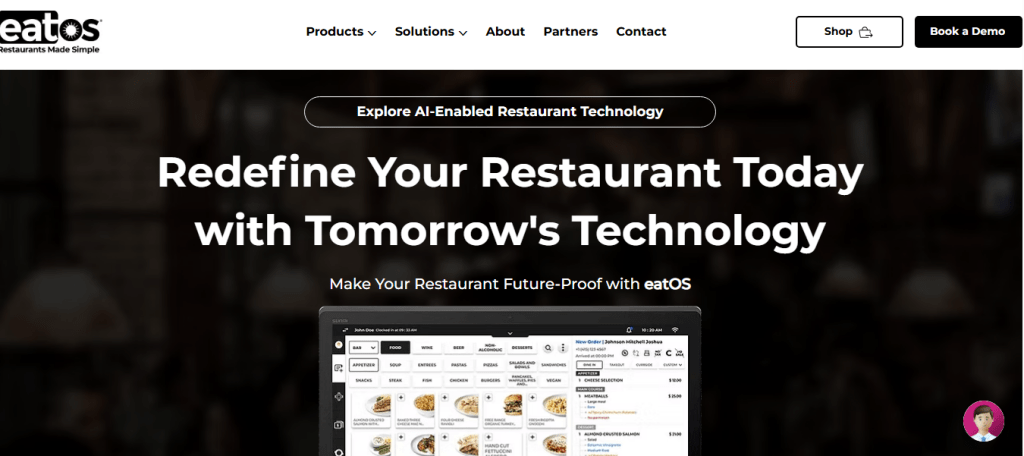
eatOS brings AI-powered restaurant management, cloud POS, payment processing, and workforce management into one platform for modern restaurant operations. The company launched in 2017 with a mission to replace outdated restaurant technology through AI-driven innovation.
Restaurant brands across quick-service, full-service, cafés, ghost kitchens, and enterprise chains use eatOS to manage daily operations more efficiently. Its generative AI assistant, Maya, helps operators create menus, write food descriptions, compare competitor pricing, and generate business reports. The company also supports restaurants through a global team operating across 16 countries and speaking 45 languages.
Standout Features
- Maya AI Assistant: Create menus, write food descriptions, compare competitor pricing, and generate reports using the built-in AI assistant.
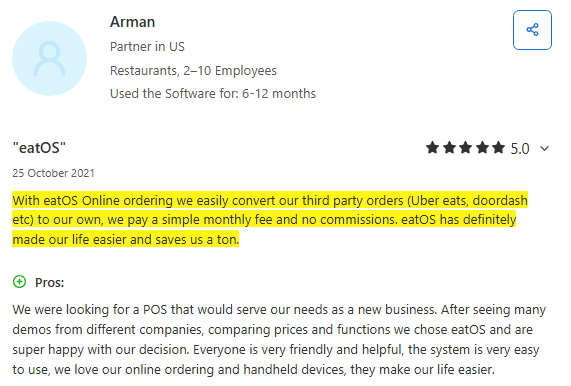
- All-in-One Restaurant Platform: Manage POS, online ordering, kitchen display systems, workforce management, inventory, payments, and loyalty from one platform.
- Cloud-Based Operations: Run single restaurants, multi-location chains, ghost kitchens, food trucks, and enterprise brands through a unified cloud platform.
- AI-Powered Reporting: Turn restaurant data into actionable insights with automated reporting and real-time business analytics.
- Guest Experience Tools: Improve service with self-service kiosks, handheld ordering devices, table-side ordering, and customer-facing displays.
- Inventory Management: Track inventory automatically with real-time stock visibility and reduce manual work across locations.
- Flexible Payment Solutions: Choose custom hardware bundles with competitive payment processing rates and low ownership costs.
- 24/7 Customer Support: Access round-the-clock assistance through phone, live chat, email, and text whenever your team needs help.
RAAS Cloud delivers a custom AI development solution for the restaurant industry
Restaurant businesses need AI solutions that align with their workflows, business goals, and existing technology, rather than relying on generic software. RAAS Cloud develops custom AI applications for inventory optimization, demand forecasting, intelligent ordering, menu recommendations, kitchen automation, predictive analytics, and customer support.
With over 10 years of software development experience, 50+ in-house technology professionals, 30+ technology services, and successful projects across multiple industries. RAAS Cloud builds secure and scalable AI solutions that help restaurants reduce operational costs, improve decision making, automate repetitive tasks, and deliver better guest experiences while supporting long-term business growth.
Contact RAAS Cloud today to discuss your requirements and turn your AI vision into a scalable business solution.
<

Dhanalakshmi Kadirvelu is a Business Intelligence and Data Analytics expert with a strong focus on software development and data engineering. She creates efficient data models, builds interactive dashboards, and integrates analytics into software systems using Power BI, OBIEE, and SQL. Her work helps development teams use data effectively to create smarter software solutions and improve business performance.