
Restaurants today rely on mobile apps to manage online orders, reservations, and customer engagement more efficiently. A dedicated restaurant app helps businesses reduce reliance on third-party platforms while building direct relationships with customers.
However, the cost of developing a restaurant mobile app can vary widely depending on the features, integrations, and level of customization required.
In this guide, we explain the average cost of developing a restaurant mobile app in 2026, the different pricing tiers, and the key factors that influence the final development budget.
What is the average restaurant mobile app development cost in 2026?
The average cost of developing a restaurant mobile app in 2026 ranges from $5,000 to $150,000+, depending on the app’s complexity and features. However, a single fixed price does not apply to every restaurant because each project has different technical and operational requirements.
For example:
- A simple online ordering app for one restaurant may cost around $15,000 to $40,000.
- A mid-level restaurant app with reservations and loyalty features typically costs $40,000 to $80,000.
- A fully featured restaurant platform with delivery tracking and integrations can exceed $100,000.
There is no single fixed price because every restaurant has different operational needs. Development costs usually depend on factors such as:
- the number of features required
- whether the app supports iOS, Android, or both
- backend infrastructure and integrations
- the complexity of the user interface
- third-party services like payments, POS systems, or analytics
Understanding these variables is key to estimating a realistic budget for restaurant mobile app development.
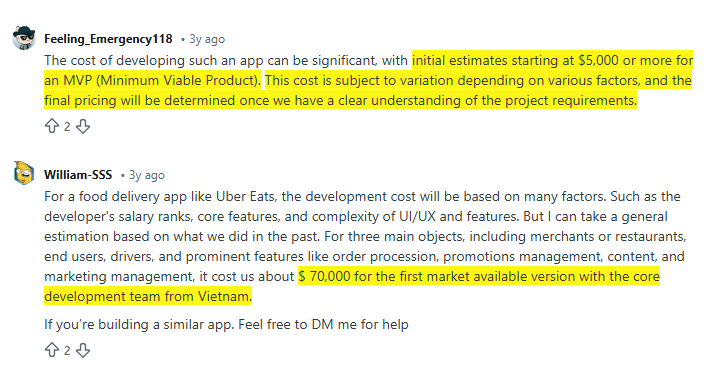
Here’s what experts on Reddit say about the cost of developing a food delivery app like Uber Eats:
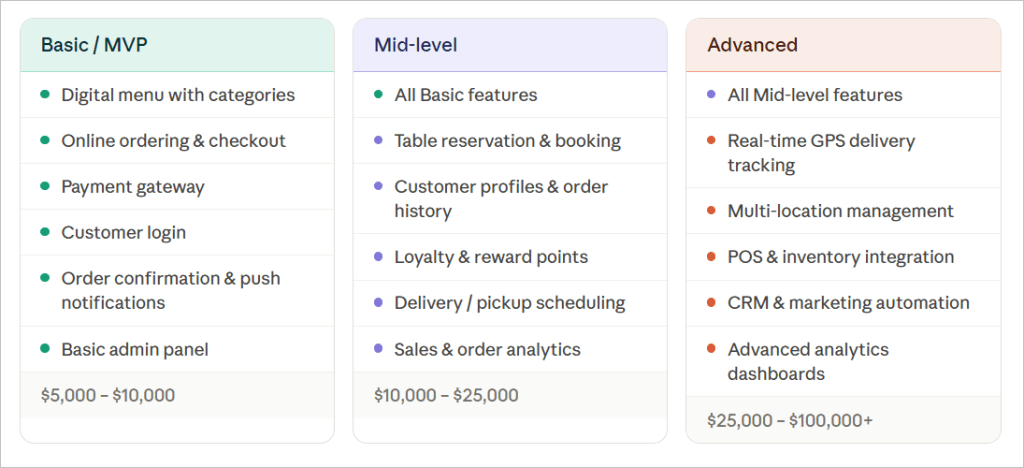
Restaurant mobile app development cost breakdown by app tier
1. Basic or MVP-Level Restaurant Mobile App
A basic or MVP (Minimum Viable Product) restaurant mobile app focuses on the essential functionality needed to launch a digital ordering experience. Restaurants typically build this version to validate the idea, start accepting online orders, and test customer adoption before investing in advanced capabilities.
Core features usually include:
- Digital menu with categories and item details
- Basic online ordering and checkout flow
- Secure payment gateway integration
- Customer login or simple account creation
- Order confirmation and push notifications
- Basic admin panel to manage menu items and orders
Best for: Single-location restaurants or small cafés launching their first mobile ordering system.
Timeline: Approximately 1–3 months.
Cost range: $5,000 – $10,000.
2. Mid-Level Restaurant Mobile App
A mid-level restaurant mobile app introduces features that improve customer experience and operational efficiency. At this stage, restaurants usually want better engagement tools and improved order management.
Core features usually include:
- All features from the MVP app
- Table reservation and booking management
- Customer profiles with saved addresses and order history
- Loyalty programs and reward points
- Push notifications for promotions and offers
- Delivery or pickup scheduling
- Sales and order analytics dashboard
Best for: Growing restaurants that want to improve customer retention and automate operations.
Timeline: Around 3–6 months.
Cost range: $10,000 – $25,000.
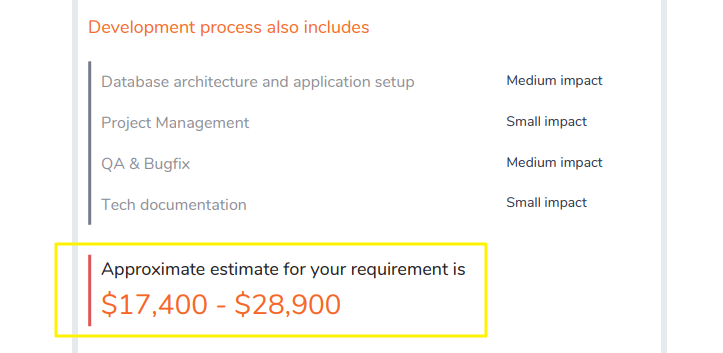
For example, a restaurant app with features like booking functionality, social features, event tools, maps and navigation, user ratings and forms, push notifications, advanced analytics, and a custom admin panel will cost between $17,400 and $28,900.
3. Advanced Restaurant Mobile App Platform
Advanced restaurant apps function as full digital ecosystems that support restaurant operations, delivery logistics, and customer engagement. These apps often include deep integrations with POS systems, analytics platforms, and CRM tools.
Core features usually include:
- All mid-level features
- Real-time delivery tracking with GPS
- Multi-location restaurant management
- POS and inventory system integration
- Advanced loyalty and referral programs
- Customer segmentation and marketing automation
- Detailed analytics and performance dashboards
Best for: Restaurant chains, cloud kitchens, and hospitality brands managing multiple locations.
Timeline: Approximately 6–9 months.
Cost range: $25,000 – $100,000+.4. Estimated Restaurant Mobile App Development Cost by App Tier (2026)
| App Tier | Cost Range | Best For | Timeline |
| Basic / MVP | $5,000 – $10,000 | Small restaurants, cafés, and startups are testing online ordering | 1–3 months |
| Mid-Level | $10,000 – $25,000 | Growing restaurants that want reservations, loyalty programs, and analytics | 3–6 months |
| Advanced / Enterprise | $25,000 – $100,000+ | Restaurant chains, cloud kitchens, and multi-location brands | 6–9 months |
Key factors that affect the restaurant mobile app development cost
1. App Features and Functionality
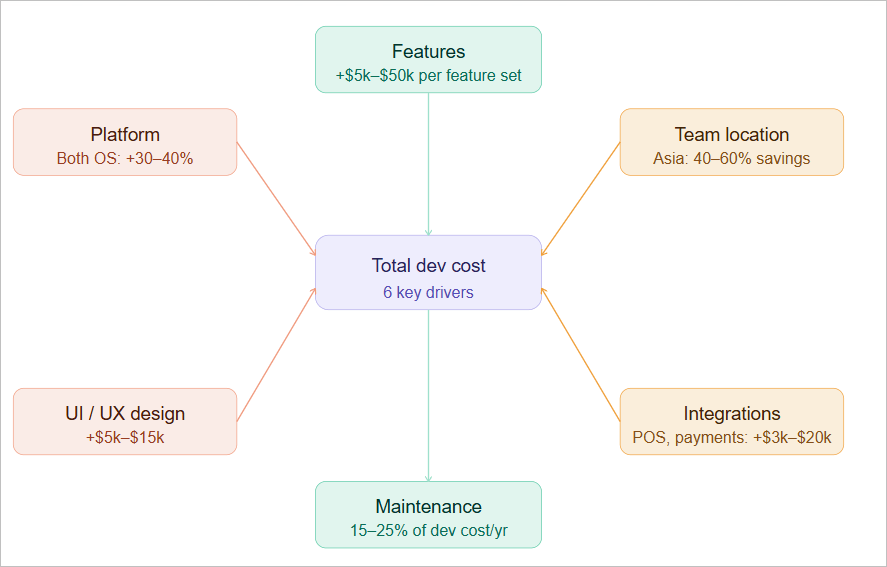
The number and complexity of features included in the app significantly influence development costs. A simple ordering app with menu browsing and checkout is relatively inexpensive. However, features like table reservations, delivery tracking, loyalty programs, and analytics dashboards require additional development time and backend infrastructure.
Cost impact: Adding advanced functionality can increase development costs by $5,000–$50,000+, depending on complexity.
Here’s what an expert on Reddit says:
You can use platforms like RAAS Cloud to hire reliable, skilled, and pre-vetted iOS or Android developers within your budget.
2. App Platform (iOS, Android, or Both)
Restaurants must decide whether the app will be available on iOS, Android, or both platforms. Native development requires separate coding for each platform, while cross-platform frameworks allow developers to build both versions from a single codebase.
Cost impact: Supporting both platforms typically increases the budget by 30–40% compared to a single platform.
3. UI and UX Design Quality
User experience plays a major role in restaurant apps. Customers expect smooth navigation, fast checkout, and visually appealing food menus. Creating custom layouts, animations, and brand-focused design elements requires additional design and development work.
Cost impact: High-quality UI and UX design can add $5,000–$15,000 to the overall development cost.
4. Backend Infrastructure
The backend system manages orders, user data, payments, notifications, and analytics. Restaurants with high order volumes need scalable infrastructure that can handle peak traffic and multiple simultaneous transactions.
Cost impact: Backend development and cloud infrastructure may add $8,000–$25,000, depending on scalability requirements.
5. Third-Party Integrations
Restaurant apps often integrate with external services such as payment gateways, POS systems, CRM platforms, delivery tracking tools, and analytics software. Each integration requires development, testing, and maintenance.
Cost impact: Third-party integrations can increase development costs by $3,000–$20,000.
6. Development Team Location
The hourly rate of developers varies significantly depending on geographic location and experience level. Development teams in North America and Western Europe typically charge higher rates than teams in Asia or Eastern Europe.
Typical hourly rates include:
- North America: $100–$200 per hour
- Europe: $70–$120 per hour
- Asia: $25–$60 per hour
Cost impact: Choosing an offshore development team can reduce overall development costs by 40–60%.
7. Maintenance and Updates
Launching the app is only the beginning. Restaurant apps require continuous maintenance, bug fixes, security updates, and feature improvements to remain functional and competitive.
Cost impact: Annual maintenance typically costs 15–25% of the original development cost.
Types of restaurant mobile apps and their impact on cost
Restaurants build different types of mobile apps depending on their operational goals. Some apps help customers order food, while others support reservations, delivery management, or internal restaurant operations. The type of app you build directly affects the development cost, required integrations, and project timeline.
1. Online Ordering App
An online ordering app allows customers to browse the restaurant menu and place orders directly through their mobile device. This is one of the most common restaurant apps because it helps restaurants accept orders without relying entirely on third-party marketplaces.
Core features: Menu browsing, cart and checkout, payment gateway integration, order notifications, and order history.
Cost range: $5,000 – $20,000
Timeline: 1–3 months
2. Table Reservation App
A table reservation app allows customers to book tables in advance while helping restaurants manage seating availability and reservations more efficiently. This type of app is especially useful for dine-in restaurants and fine-dining establishments.
Core features: Reservation calendar, table availability management, booking confirmations, reminders, and notifications.
Cost range: $8,000 – $25,000
Timeline: 2–4 months
3. Loyalty and Rewards App
A loyalty and rewards app focuses on customer retention. It encourages repeat visits by offering reward points, discounts, and personalized promotions to loyal customers.
Core features: Loyalty points system, referral programs, coupons and discounts, push notifications for promotions.
Cost range: $10,000 – $30,000
Timeline: 2–4 months
4. Delivery Tracking App
A delivery tracking app helps restaurants manage delivery operations and allows customers to track their orders in real time. These apps are common for restaurants that offer in-house delivery services.
Core features: GPS tracking, delivery status updates, driver management dashboard, and order tracking notifications.
Cost range: $15,000 – $50,000
Timeline: 3–6 months
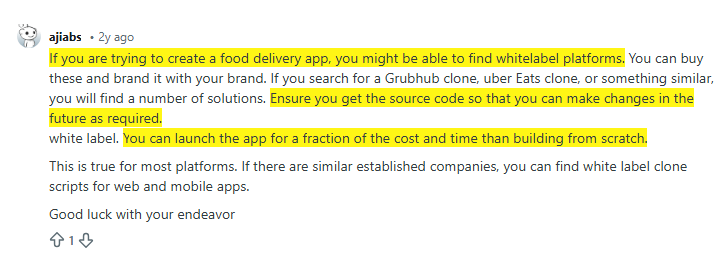
An expert on Reddit says to buy food delivery app clones from white-label platforms instead of developing one from scratch. This will save you time and money.
5. Full-Service Restaurant Management App
A full-service restaurant management app is a comprehensive platform that manages multiple aspects of restaurant operations. These systems often integrate ordering, inventory management, analytics, and customer relationship management tools.
Core features: POS integration, order management system, inventory tracking, customer CRM, analytics dashboards, loyalty program integration.
Cost range: $25,000 – $100,000+
Timeline: 4–9 months
6. Restaurant Menu App
A restaurant menu app is a simple digital menu that allows customers to view dishes, pricing, and restaurant information through their phones. These apps are commonly used for QR-code menus or digital catalogs.
Core features: Menu categories, food images, item descriptions, search, and filtering options.
Cost range: $5,000 – $15,000
Timeline: 1–2 months
7. Kitchen Display System (KDS) App
A kitchen display system app helps kitchen staff manage incoming orders digitally instead of using printed tickets. It improves workflow efficiency and helps kitchen teams prioritize orders more effectively.
Core features: Order queue display, order preparation tracking, and status updates for kitchen staff.
Cost range: $20,000 – $50,000
Timeline: 3–5 months
8. Order-Ahead / Pickup App
An order-ahead app allows customers to place orders in advance and pick them up at a scheduled time. This type of app is popular with cafés, quick-service restaurants, and takeaway businesses.
Core features: Scheduled ordering, pickup time selection, payment integration, and order notifications.
Cost range: $6,000 – $20,000
Timeline: 1–3 months
Here’s a breakdown table for types of restaurant mobile apps and their impact on cost
| App Type | Main Purpose | Typical Cost | Timeline |
| Online Ordering App | Customers browse the menu and place orders | $5,000 – $20,000 | 1–3 months |
| Table Reservation App | Customers book tables in advance | $8,000 – $25,000 | 2–4 months |
| Loyalty & Rewards App | Retain customers with points and offers | $10,000 – $30,000 | 2–4 months |
| Delivery Tracking App | Track delivery drivers and orders | $15,000 – $50,000 | 3–6 months |
| Restaurant Menu App | Digital menu with dish details | $5,000 – $15,000 | 1–2 months |
| Order-Ahead / Pickup App | Customers order in advance for pickup | $6,000 – $20,000 | 1–3 months |
| Kitchen Display System (KDS) | Manage kitchen order queue digitally | $20,000 – $50,000 | 3–5 months |
| Full Restaurant Management App | Manage orders, inventory, CRM, and analytics | $25,000 – $100,000+ | 4–9 months |
How RAAS Cloud helped a US-based hotel develop a hotel management system
RAAS Cloud partnered with a leading US hotel chain to build a modern cloud-based hotel management system that supports multiple branches.
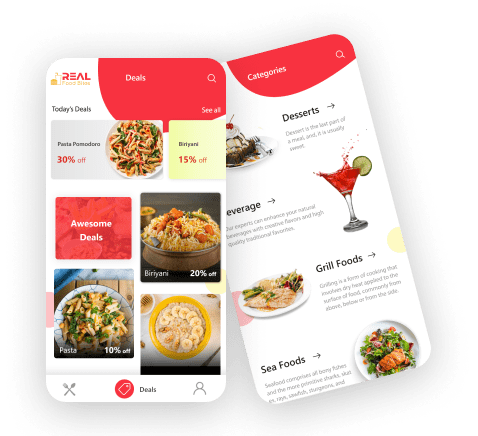
Here’s the app UI:
The client’s legacy web system struggled with scalability, performance, and user experience as the number of hotel locations grew.
We redesigned the platform with a centralized architecture that allowed the corporate team to monitor operations across all branches while enabling individual hotels to manage bookings, room inventory, staff tasks, and daily operations independently.
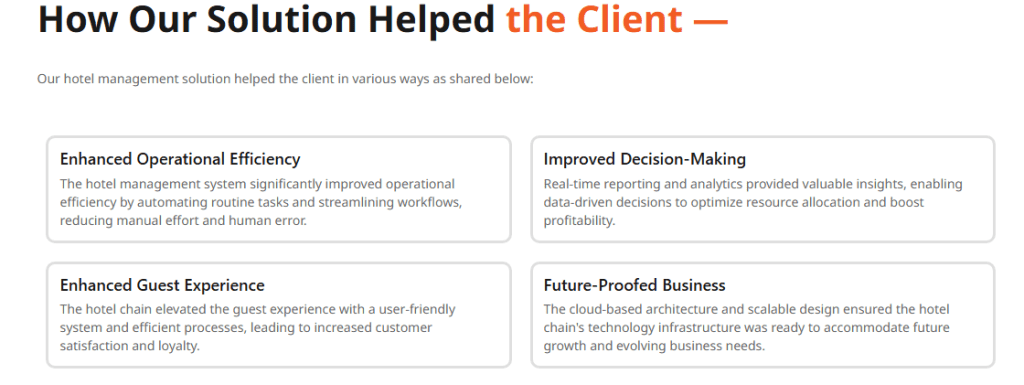
The system included room and guest management, POS integration, financial reporting, inventory tracking, role-based access control, and real-time analytics. This helped the hotel chain streamline operations, improve decision-making, and deliver a better guest experience. The cloud architecture also ensured the platform could scale with future growth.
RAAS Cloud is a US-based software development and IT outsourcing company with 10+ years of industry experience, 60+ successful projects, and a team of 50+ skilled professionals, delivering scalable digital solutions for global businesses.👉 Looking to build a restaurant app or hospitality management system? Contact RAAS Cloud to discuss your project and get a customised development plan for your business.

Dhanalakshmi Kadirvelu is a Business Intelligence and Data Analytics expert with a strong focus on software development and data engineering. She creates efficient data models, builds interactive dashboards, and integrates analytics into software systems using Power BI, OBIEE, and SQL. Her work helps development teams use data effectively to create smarter software solutions and improve business performance.