

Most startups don’t fail because of bad ideas, but they fail because of poor execution.
And more often than not, that poor execution comes down to technical decisions made too early, too fast, or without the right expertise.
Choosing the wrong tech stack. Hiring developers without a clear roadmap. Building features before validating demand and ignoring scalability until it’s too late.
These are not just technical mistakes; they are business risks.
But here’s the reality:
Most early-stage startups cannot afford a full-time CTO. And even if they could, they may not need one full-time.
This is where CTO as a Service (CaaS) becomes a game-changer.
It gives startups access to experienced technical leadership on demand, helping them make smarter decisions, move faster, and avoid costly mistakes.
What is CTO as a Service (CaaS)?
CTO as a Service (CaaS) is a flexible model that gives startups access to a fractional Chief Technology Officer without hiring a full-time CTO.
Instead of paying a high fixed salary, you work with an experienced CTO part-time, on demand, or project-based.
This role goes beyond advisory. A good fractional CTO actively contributes to:
- Tech stack selection based on scalability and business needs
- System architecture planning to support future growth
- Development process setup (agile workflows, code standards, CI/CD)
- Team hiring and mentoring
- Product roadmap alignment with business goals
In simple terms, a fractional CTO ensures you’re not just building fast, you’re building right.
Why Startups Are Increasingly Choosing CaaS
The way products are built today has changed significantly. Applications are more complex, user expectations are higher, and the margin for error is smaller. At the same time, startups are expected to move faster than ever.
This creates a gap. Founders need strong technical direction, but they may not need or afford a full-time CTO. Developers can build, but they don’t always define long-term architecture or strategy.
CaaS fills this gap by offering high-level technical leadership without long-term overhead. It allows startups to stay lean while still making well-informed decisions. Instead of reacting to problems later, they can prevent them early.
When Does a Startup Actually Need a Fractional CTO?
1. You’re Building an MVP but Don’t Know Where to Start
One of the biggest mistakes founders make is jumping straight into development without enough clarity. At this stage, uncertainty around what to build, how to build it, and what to prioritize can slow everything down. Many startups end up building too many features too early or choosing technologies that don’t fit their actual needs.
This often results in over-engineered products, delayed launches, and unnecessary development costs. Instead of validating the idea quickly, teams get stuck in long development cycles.
A fractional CTO brings structure to this phase by helping you define a lean MVP roadmap, choose the right tech stack based on your product goals, and focus only on what’s essential for validation. This ensures you launch faster while building a strong foundation for future growth.
2. You’re Relying Fully on Developers (Without Strategic Direction)
Developers are critical for execution, but they are not always responsible for long-term product strategy. When startups rely entirely on developers for decision-making, choices are often driven by familiarity or short-term convenience rather than long-term scalability.
This can lead to inconsistent architecture, fragmented systems, and a lack of alignment between the product vision and technical implementation. Over time, these gaps become harder and more expensive to fix.
A fractional CTO provides the strategic layer that connects business goals with technical execution. They ensure that decisions are consistent, architecture is well-planned, and the development process stays aligned with the overall direction of the product.
3. You’re Scaling, But Your Product Isn’t
As your product starts gaining traction, technical limitations begin to surface. Increased traffic, more features, and growing user demands can expose weaknesses in the system.
You might start noticing slow load times, frequent bugs, or even system crashes. These are usually signs that the product wasn’t built with scalability in mind from the beginning.
At this stage, a fractional CTO helps stabilize and future-proof your product. They can redesign the system architecture, optimize performance, and introduce better engineering practices that support growth. Instead of constantly fixing issues, your product becomes capable of scaling smoothly.
4. You’re Hiring Developers Without Technical Expertise
Hiring developers without a strong technical background can be one of the riskiest decisions for a startup. Without the ability to properly evaluate candidates, founders often rely on resumes or surface-level assessments, which don’t always reflect real capability.
This can lead to poor hiring decisions, inconsistent code quality, and long-term inefficiencies in the development process. In many cases, startups end up spending more time fixing work than building new features.
A fractional CTO helps you build the right team from the start. They handle technical interviews, define clear hiring criteria, and establish coding standards. This ensures that your team is not only capable but also aligned with the product’s technical vision.
5. You Need to Move Fast Without Burning Budget
Speed is critical in the early stages, but so is cost control. Hiring a full-time CTO can be expensive, often costing between $150K to $300K+ annually, which may not be feasible for most startups.
At the same time, moving forward without technical leadership can lead to costly mistakes that are even more expensive to fix later.
CaaS offers a balanced approach. It allows startups to access senior-level expertise only when needed, without long-term commitments. This helps you move faster, make better decisions, and avoid unnecessary expenses all while staying lean.
What Does a Fractional CTO Actually Do? (Practical View)
A fractional CTO is not just a consultant; they are actively involved in your product journey.
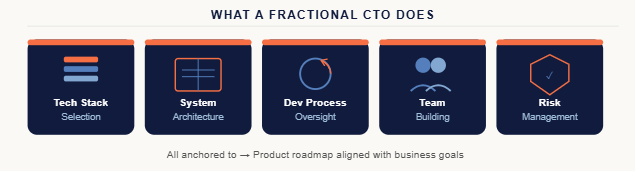
Here’s what they typically handle:
1. Tech Stack Decisions
A fractional CTO helps you choose the right technologies based on your product’s needs, not just what’s trending. They consider factors like scalability, performance, and long-term maintainability before finalizing tools such as ReactJS, backend frameworks, or cloud platforms. This ensures your product is built on a strong and future-ready foundation.
2. System Architecture
They design the overall structure of your application to ensure it can handle growth without frequent rework. This includes planning how different components interact, avoiding bottlenecks, and keeping the system easy to maintain as new features are added. A well-defined architecture reduces future complexity and technical debt.
3. Development Oversight
A fractional CTO ensures that development is not just fast, but also efficient and high-quality. They set coding standards, review processes, and workflows that keep the team aligned and productive. This helps maintain consistency while ensuring timelines are met without compromising quality.
4. Team Building
They play a key role in building the right development team by helping you hire skilled developers and structure teams effectively. They also establish clear guidelines and best practices so everyone works with the same standards. This creates a more efficient and reliable development environment.
5. Risk Management
A fractional CTO identifies potential risks early, whether it’s scalability issues, technical debt, or security concerns. By addressing these proactively, they prevent small problems from turning into major roadblocks. This ensures your product remains stable and ready for growth.
Common Mistakes Startups Make Without a CTO
- Choosing trendy tech instead of the right tech
- Building too many features too early
- Ignoring performance and scalability
- Hiring developers without evaluation
- Accumulating technical debt from day one
When You DON’T Need a Fractional CTO
Not every startup needs a CTO immediately.
You may not need one if:
- You already have an experienced technical co-founder
- Your product is extremely simple (landing page, no backend complexity)
- You’re still validating the idea without building
However, once you move into product development or scaling, CTO-level guidance becomes critical.
How RAAS Cloud Supports Startups with CTO-Level Expertise
RAAS Cloud works closely with startups to provide CTO-level guidance alongside development, helping founders make the right technical decisions from day one.
Instead of separating strategy and execution, RAAS Cloud ensures both move together so your product is not just built fast, but built right.
Startups partnering with RAAS Cloud benefit from expert support in areas like tech stack selection, scalable architecture planning, team structuring, and ongoing technical direction as the product evolves.
This approach helps reduce technical risk, improve product quality, and accelerate time-to-market.
👉 If you’re looking for CTO-level support for your startup, you can get in touch with the RAAS Cloud team to discuss your requirements.
Further Resources
- How Much Does It Cost To Hire Python Developers In 2026
- iOS App Development Cost in 2026: A Complete Guide
- How Much Does It Cost to Hire Dedicated Developers in the USA?
- SaaS Development Cost Breakdown: MVP vs Full Product
How to Choose the Right CaaS Partner
Not all fractional CTO services are equal.
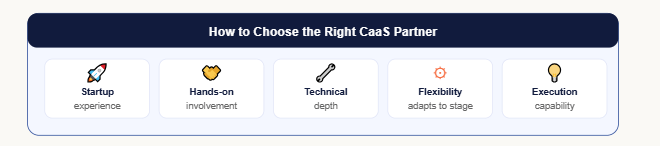
Here’s what to look for:
- Startup Experience → Have they worked with early-stage companies?
- Hands-on Involvement → Do they actively guide development or just advise?
- Technical Depth → Can they make architecture-level decisions?
- Flexibility → Do they adapt to your stage and needs?
- Execution Capability → Can they also support development if needed?
Making the Right Technical Decisions Early
Early technical decisions define your product’s speed, scalability, and long-term success. Many startups move fast but choose the wrong architecture or tools, leading to delays, rework, and rising costs later. A fractional CTO helps you make the right decisions from the start, ensuring your product is built for performance, growth, and stability.
If you’re unsure about your tech direction, connecting with the RAAS Cloud team can help you move forward with clarity and avoid costly mistakes.