

We collected the latest software development statistics for 2026 from trusted global sources and through our own extensive research as a software development company.
The data highlights how AI, cloud adoption, and automation are transforming the development process, making it faster and more efficient.
These insights cover trends in coding, market growth, and developer behavior. All original data sources and URLs are mentioned at the end of this article for transparency.
Software development key statistics and highlights (2026)
At a quick note: By 2025, AI, cloud adoption, and open-source collaboration are transforming software development, making projects faster, smarter, and more efficient than ever.
- 92% of developers use AI tools to write, debug, or test code faster and more accurately.
- 95% of new workloads run in the cloud.
- 72% of organizations plan to use AI tools; 46% of developers still don’t fully trust AI outputs.
- Over 85% of companies follow Agile methodologies.
- 70% of development teams use test automation; 45% still struggle with full coverage.
- Custom software market projected to reach USD 146.18B by 2030, growing 22.6% annually.
- 96% of software applications include at least one open-source component.
- 60% of developers code in more than one programming language.
- 25% of software projects run late or over budget.
- Software developer jobs are expected to grow 25% in five years globally.
AI Adoption and Automation in Software Development
Artificial intelligence has become a big part of software development. Developers now use AI tools to write, review, and improve code faster. Many organizations depend on AI-powered systems to save time and boost productivity.
- Around 92% of developers use AI tools to write, debug, and test code faster and more accurately.
- About 90% of organizations rely on AI-generated code in their projects to improve speed and reduce manual work.
- Microsoft reports that 30% of its code is now written with AI assistance, showing how automation is becoming mainstream.
- AI-assisted code reviews help cut post-release bugs by nearly 25%, improving overall product quality.

- Around 84% of companies plan to use AI tools, but 46% of developers still do not fully trust AI-generated outputs.
- Nearly 20% of organizations restrict AI tools, yet shadow use continues because of their proven efficiency.
- AI-powered coding assistants have increased developer productivity by 20% to 35%, allowing faster releases.
- AI agents now handle 80% of customer interactions, improving response time and user experience.
- 63% of developers say AI and machine learning have made projects more complex, as teams must now handle advanced automation logic.

- 72% of engineers find it difficult to keep their skills updated as AI continues to evolve rapidly.
Cloud, Open-Source, and DevSecOps Growth
Cloud computing and open-source technology are changing how software is built and managed. Most companies now depend on cloud platforms for scalability, flexibility, and security. At the same time, open-source tools and DevSecOps practices are helping developers build safer and faster applications.
- Around 95% of new workloads now run in the cloud, showing that most companies have shifted away from traditional on-premise systems.
- Nearly 83% of developers believe that moving to the cloud has improved cost savings and team agility.
- Containerization has reached 75% adoption, which is a 35% rise compared to last year, as teams use containers for faster deployment.
- However, 30% of legacy systems still operate outside modern cloud environments, slowing digital transformation.

- About 96% of software applications now depend on at least one open-source component, showing how open collaboration drives innovation.
- By 2025, 95% of commercial software will include open-source code, making it an essential part of modern development.
- Open-source contributions have increased by 280% since 2010, proving the growing power of global developer communities.
- Around 47% of businesses use open-source testing tools, helping teams cut costs and improve flexibility.
- Nearly 94% of companies that use DevSecOps now integrate security practices early in the development process, which reduces risks.
- 60% of banks continue to depend on legacy COBOL systems, showing how hard it is to modernize long-standing software.
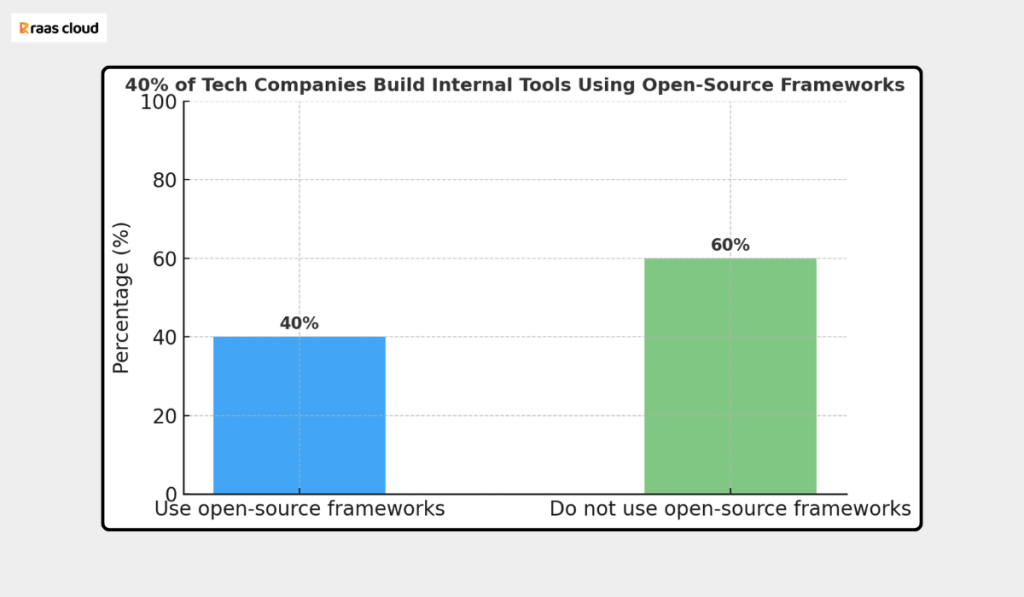
- Around 40% of tech companies now build internal tools using open-source frameworks, balancing customization with cost efficiency.
Software Market and Global Economic Growth
The software industry is one of the fastest-growing parts of the global economy. As businesses move online and depend more on digital tools, spending on software development keeps increasing. These statistics show how the market is growing, where the money is going, and what to expect in the coming years.
- The global custom software development market was valued at USD 43.16 billion in 2024 and is expected to reach USD 146.18 billion by 2030, growing at a strong rate of 22.6% per year.
- The worldwide software market is set to reach USD 741 billion by 2025, showing steady expansion across industries.
- By 2029, global software revenues are projected to rise to USD 896 billion, growing at a 4.87% compound annual rate from 2025 to 2029.
- Enterprise software spending is forecasted to reach USD 1.25 trillion in 2025, as large companies continue digital upgrades.
- The global software market size stood at USD 737 billion in 2024 and is projected to hit USD 2.25 trillion by 2034, reflecting an 11.8% yearly growth rate.
- The enterprise segment alone is expected to generate USD 315 billion by 2025, making it one of the largest software categories.
- The application development software market will grow to USD 196 billion by 2025, as demand for business and SaaS tools increases.
- Global IT spending will rise by 9.3% in 2025, with both software and data center services seeing double-digit growth.
- The United States will remain the biggest player in the global market, with USD 380 billion in software revenue expected by 2025.

- Over 85% of businesses now use custom-built software to manage daily operations and improve productivity.
- On average, building a SaaS application takes 6 to 9 months, depending on complexity and team size.
Developer Workforce and Hiring Trends
The demand for skilled software developers keeps rising as more companies go digital. Many businesses are expanding their tech teams, hiring remote workers, and focusing on multi-skilled developers.
- Around 72% of organizations now outsource development projects to access better talent and speed up delivery timelines.
- Nearly 63% of companies plan to increase their developer headcount in 2025, showing strong demand for coding professionals.
- About 45% of developers work remotely at least part-time, proving that flexible work models are now a normal part of the tech industry.
- 57% of developers handle both front-end and back-end work, showing how full-stack skills are becoming more common.

- Around 60% of developers code in more than one programming language, reflecting the growing need for multi-skilled teams.
- Nearly 85% of development teams use multiple programming languages in their projects to meet diverse technical requirements.
- The average developer today knows at least three programming languages, showing strong adaptability in the workforce.
- Around 25% of software projects still run late or go over budget, highlighting the importance of skilled project management.

- About 65% of companies invest in ongoing training programs to help their teams learn new technologies and stay competitive, yet 45% of developers find it hard to keep up with new tools and platforms, as technology evolves faster every year.
- Almost 50% of software teams face challenges collaborating remotely, especially when working across time zones and platforms.
Programming Languages and Tech Stack Choices
Programming languages and technology stacks shape how software is built and maintained. Developers now use a mix of languages, frameworks, and methods to create flexible and high-performing systems.
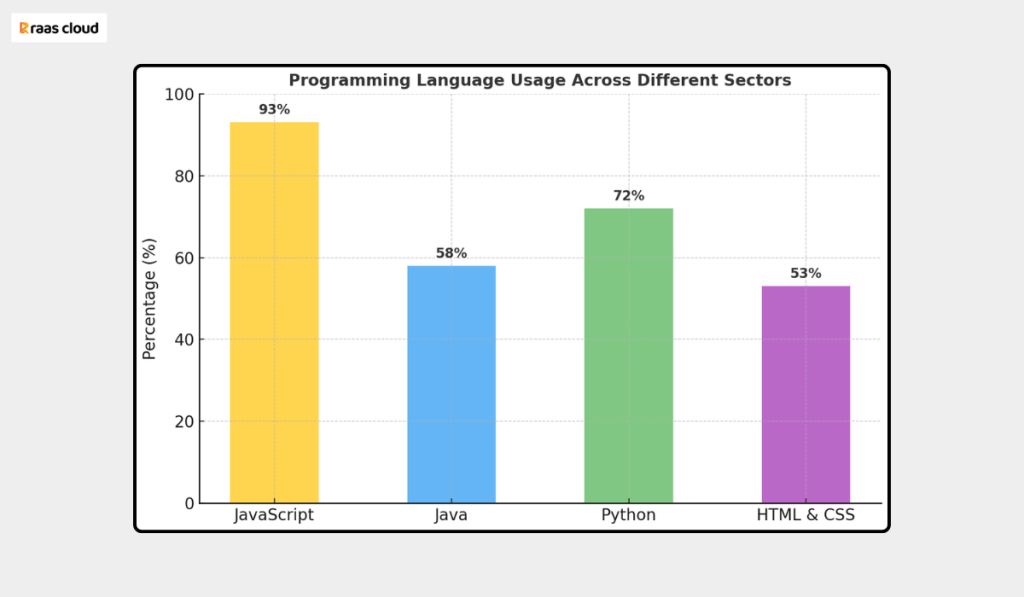
- Around 93% of web applications use JavaScript, making it one of the most widely used programming languages in the world.
- Java remains a top choice for 58% of large corporations, especially in enterprise and backend applications.
- About 72% of startups prefer Python, mainly for data science, automation, and web development projects.
- Nearly 53% of developers still use HTML and CSS to build the foundation of modern web applications.
- Around 34% of project failures happen because teams select the wrong programming language or toolset, proving the importance of good tech choices.
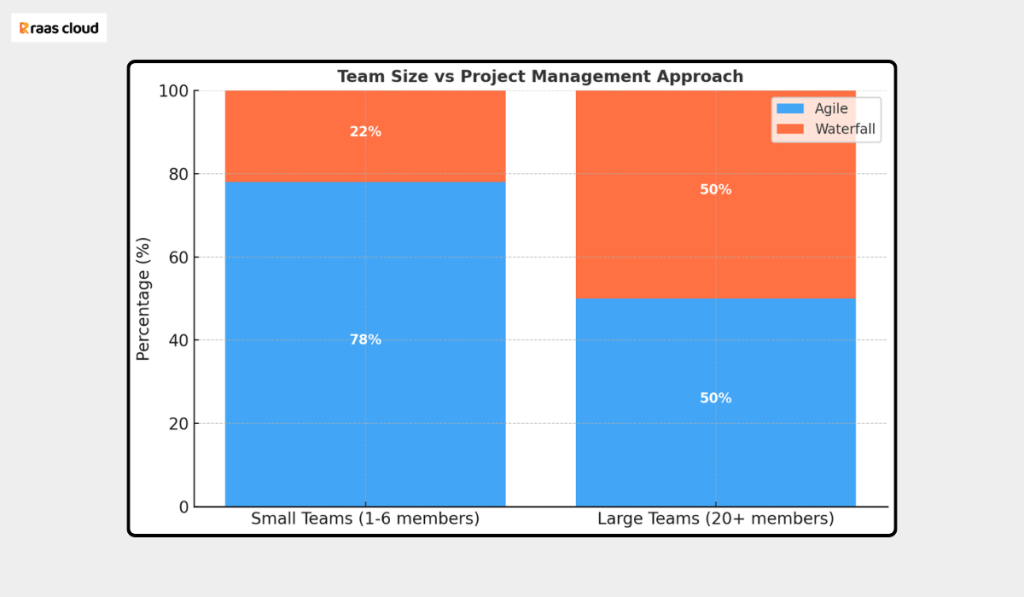
- Smaller teams with one to six members show a 78% preference for Agile methods, which support flexibility and quick results.
- Larger teams with over 20 members use both Agile and Waterfall models, depending on project needs and complexity.
- About 29% of development teams mix Scrum and Kanban to create hybrid workflows that suit their goals.
- Nearly 31% of large-scale software deployments still use the Waterfall method, often because of structured and clear project phases.
- Projects managed under the Waterfall model take about 20% longer to complete than those using Agile methods.
- Around 53% of teams using Kanban say flexibility is their biggest advantage, helping them adjust plans faster when requirements change.
Agile, DevOps, and Project Management
Agile and DevOps have transformed how software teams plan, build, and deliver projects. These methods help developers release better software faster and respond to change with flexibility. The following statistics highlight how teams around the world are using Agile and DevOps in 2025.
- Over 85% of companies now follow Agile methodologies to improve teamwork, flexibility, and project delivery speed.
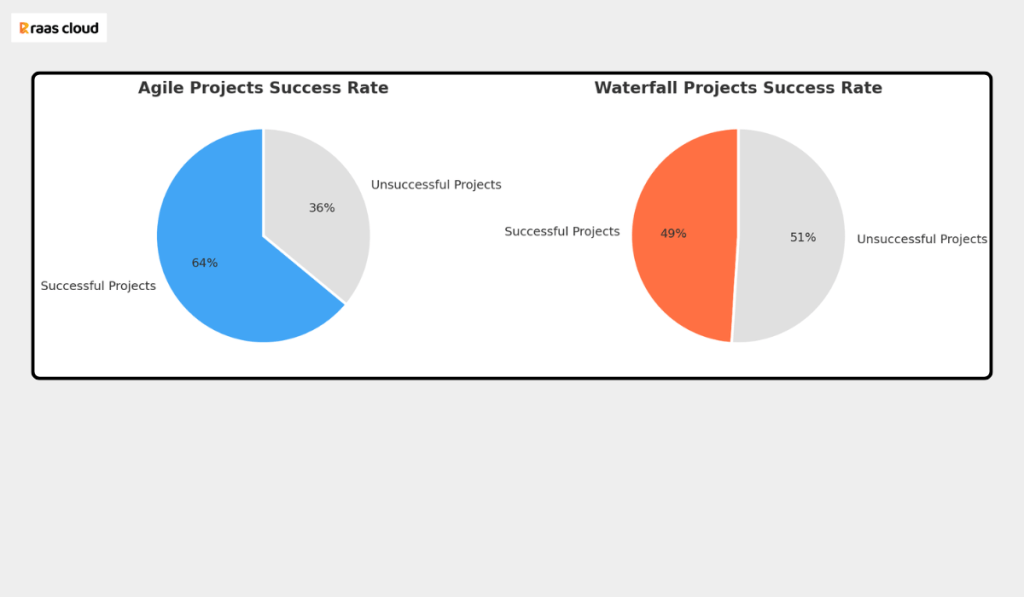
- Projects using Agile methods succeed 64% of the time, compared to 49% for those using Waterfall.
- Around 45% of Agile teams follow the Scrum framework, which focuses on short sprints and regular feedback.
- Nearly 13% of tech startups have adopted Kanban, which helps them manage tasks and adapt to changing requirements quickly.
- About 40% of organizations have invested in Agile training programs to improve team collaboration and efficiency.
- Around 87% of Scrum teams deliver a working product increment at the end of each sprint, showing how Agile keeps projects on track.
- 50% of Agile teams now use continuous deployment tools, helping them push updates and fixes automatically.
- Nearly 82% of Agile teams have implemented CI/CD pipelines, ensuring consistent delivery and better software quality.
- 53% of all software organizations use CI/CD systems, making automation a key part of modern project workflows.
- Around 74% of companies say Agile adoption has helped them handle project uncertainties better, improving overall productivity.
- 80% of software teams apply some form of Agile process in their software development lifecycle, making it the dominant approach in 2025.
Software Testing and Quality Assurance (QA)
Software testing ensures that applications work correctly and meet user expectations. It helps teams find bugs early, reduce costs, and improve overall product quality. These statistics show how testing and QA practices are going on.
- Fixing a bug after release costs up to 25 times more than fixing it during the development stage, proving the value of early testing.
- Around 70% of development teams use test automation tools, but nearly 45% still struggle to achieve full test coverage.
- Nearly 90% of software teams rely on functional testing as their main way to verify code quality and usability.
- About 78% of organizations perform performance testing, ensuring that applications can handle large traffic and workloads.
- The use of automated testing has grown by 85% in the last decade, showing that automation is now a major part of QA.
- Quality assurance and testing make up about 26% of total project budgets, showing how important it is in the software lifecycle.

- Selenium remains the most used testing tool, with around 30% of QA professionals depending on it for automation.
- Only 14% of development teams describe their testing processes as advanced, meaning most organizations still have room to improve.
- About 95% of Agile companies use some form of test automation, linking QA directly with Agile delivery cycles.
- Defects found in the design stage are 10 to 100 times cheaper to fix than those found after product release, highlighting the need for early checks.
- Regular feedback from testers and users helps teams prevent post-release issues, improving overall software stability.
Software Development Lifecycle (SDLC) Insights
A strong software development lifecycle helps teams plan better, reduce errors, and deliver high-quality products. Every stage, from requirement gathering to testing, affects the success of a project.
- Only 60% of software projects follow all SDLC phases properly, which often leads to confusion and missed deadlines.

- Around 22% of projects fail because of poorly defined requirements, showing the importance of a clear start.
- Nearly 56% of software defects appear during the requirements and design stages, proving that early errors cause big problems later.
- 48% of defects come from mistakes in the requirement analysis phase, which teams can prevent with better planning.
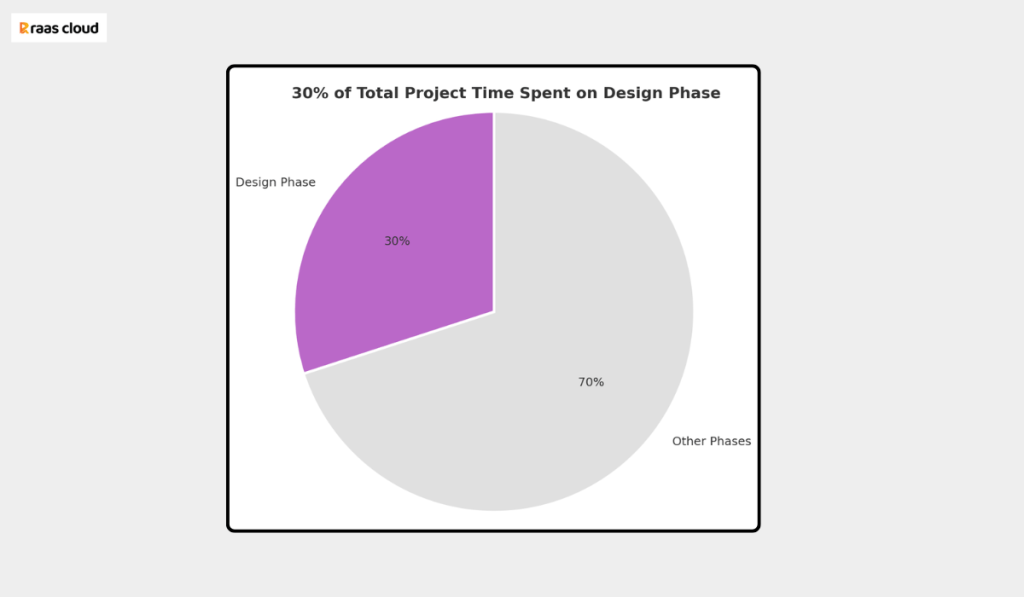
- On average, about 30% of total project time is spent on the design phase, as it lays the foundation for development.
- The testing phase takes around 25% of the total project duration, showing how much time teams invest in quality checks.
- Inefficient coding practices can slow software performance by up to 70%, making optimization a key part of the process.
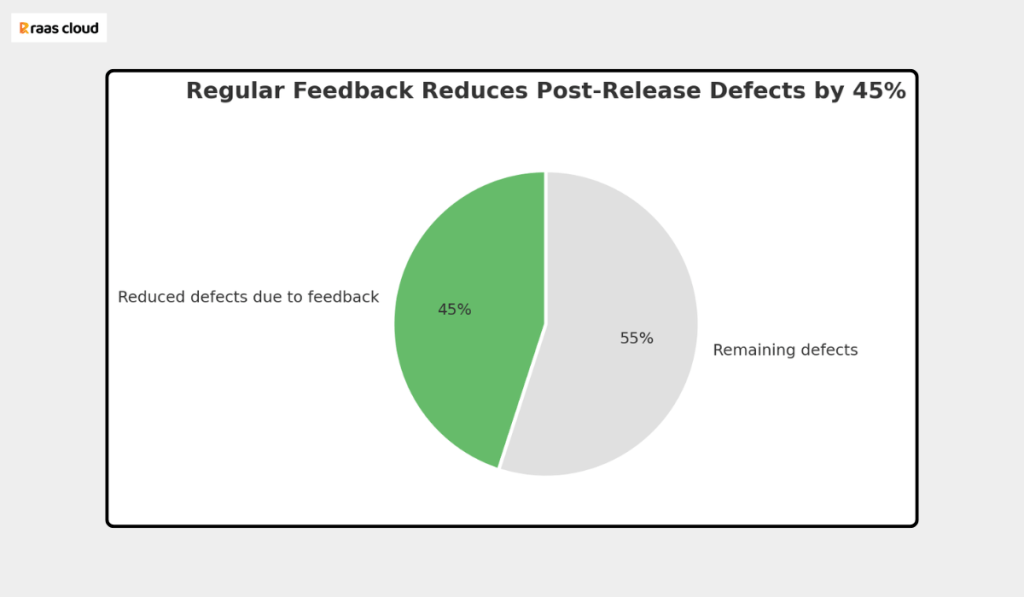
- Regular feedback during the verification phase reduces post-release defects by up to 45%, helping maintain quality.
- Nearly 70% of organizations believe QA is critical for business continuity, showing that testing and lifecycle planning go hand in hand.
- Despite best practices, over 50% of projects still face delays or go over budget, often because teams skip steps in the lifecycle.
Development Challenges and Team Issues
Even with modern tools and methods, software development still faces many challenges. Teams must deal with fast-changing technologies, unclear goals, and tight deadlines.

- Around 68% of developers face unexpected challenges in at least half of their projects, often due to changing requirements or unclear goals.
- Nearly 49% of developers say the rapid pace of technology is the biggest challenge, making it hard to stay up to date.
- About 57% of projects struggle with unclear or incomplete requirements, leading to wasted effort and rework.
- 40% of teams report that poor testing environments slow their progress, delaying releases and reducing confidence in final products.
- Around 55% of software projects face delays because of last-minute scope changes, known as scope creep.
- 70% of developers express concern about cybersecurity issues during development, showing that security is now a top priority.
- Around 52% of developers say choosing the right tools and frameworks for a project is one of their toughest tasks.
- Nearly 47% of developers find it difficult to integrate new technologies into legacy systems, which slows modernization.
- 62% of software teams struggle to balance feature development and bug fixing, especially in tight schedules.
- Around 76% of developers believe that ongoing learning, open communication, and flexible methods are key to solving project challenges.
- 60% of delayed projects go through post-project analysis, helping teams find and fix the causes of delay for future success.
Global Developer Landscape and Career Outlook
Software development is now a truly global field. Developers from all over the world are shaping the technology industry through coding, design, and innovation. These statistics show how the developer community, job market, and salaries are changing.
- The median annual wage for software developers is around USD 132,270, making it one of the most rewarding tech careers.
- Software quality assurance analysts and testers earn about USD 101,800 a year, reflecting the growing importance of testing roles.
- The U.S. Bureau of Labor Statistics expects software-related jobs to grow by 17.9% from 2023 to 2033, adding around 303,700 new positions.
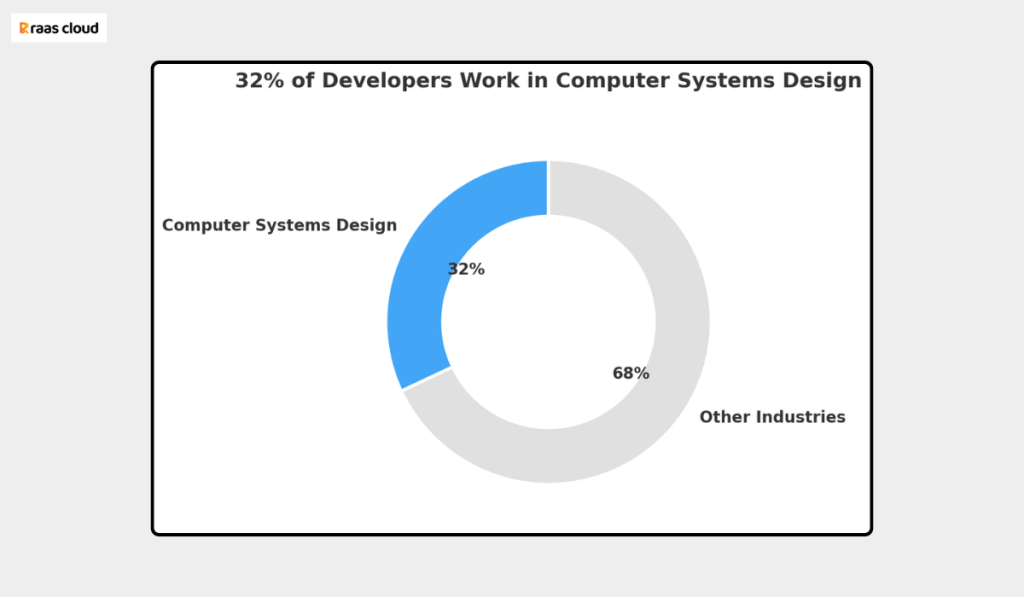
- The largest share of software jobs is in computer systems design, which employs 32% of all developers.
- Brazil’s share of global software developers increased from 10.1% in 2022 to 27.8% in 2024, showing strong regional growth.
- Romania holds about 4.8% of global software development talent, while the United Kingdom has 4%, both maintaining steady contributions.
- The average age of male developers is 39.2 years, while female developers average 38.5 years, showing a balanced age profile in the field.
- Student enrollment in software development courses has grown by 320% over the past decade, proving global interest in coding careers.
- The number of software developers worldwide is expected to grow by 25% in the next five years, showing that demand for developers will continue to rise.
Final Words
From AI-powered coding to cloud adoption and open-source collaboration, developers are shaping a digital-first future. Companies are investing more in automation, training, and agile processes to keep up with changing demands.
These statistics show that software development is not just expanding in size but also evolving in creativity, collaboration, and impact across every major industry in the world.
Data Sources
- https://loopstudio.dev/software-development-statistics/
- https://www.grandviewresearch.com/industry-analysis/custom-software-development-market-report
- https://blog.gitnux.com/software-development-statistics/
- https://hutte.io/trails/software-development-statistics/
- https://thrivemyway.com/software-development-statistics/
- https://medium.com/@bharatlogic.mohali/the-growing-impact-of-custom-software-development-latest-trends-and-statistics-ab9f25377882
- https://www.alliedmarketresearch.com/application-development-software-market-A09561
- https://www.forbes.com/sites/forbestechcouncil/2023/03/29/the-software-developer-is-dead-long-live-the-software-developer/
- https://www.linkedin.com/pulse/generative-ai-software-development-market-share-growth-denis-green
- https://www.atlassian.com/agile/scrum/roles
- https://www.statista.com/topics/1694/app-developers/
- https://aloa.co/blog/the-role-of-ai-in-software-development-trends-statistics-and-growth
- https://www.geeksforgeeks.org/challenges-of-software-developers.
- https://www.spiceworks.com/tech/devops/guest-article/software-development-challenges/
- https://datausa.io/profile/soc/software-developers/

Dhanalakshmi Kadirvelu is a Business Intelligence and Data Analytics expert with a strong focus on software development and data engineering. She creates efficient data models, builds interactive dashboards, and integrates analytics into software systems using Power BI, OBIEE, and SQL. Her work helps development teams use data effectively to create smarter software solutions and improve business performance.