

Cyberattacks continue to grow across businesses, governments, hospitals, banks, and online platforms.
In 2026, companies face rising ransomware attacks, AI-powered phishing scams, insider threats, cloud security risks, and large-scale data breaches. Businesses now spend billions every year to prevent attacks, recover stolen data, and improve security systems.
Recent cybersecurity reports also show that attackers now use artificial intelligence to create smarter phishing emails, deepfake scams, and automated attacks.
This listicle roundup shares the latest cybersecurity statistics for 2026, including data on cybercrime costs, ransomware growth, AI-driven attacks, phishing trends, SMB security risks, breach costs, regional attack patterns, and cybersecurity spending trends.
Note: All data presented in this article was curated from trusted industry reports and cybersecurity research platforms, including IBM Security, Verizon Business DBIR, Sophos, Statista, McKinsey & Company, Cisco, Check Point Software, FBI Internet Crime Complaint Center, and other cybersecurity research sources listed below.
Cybersecurity Statistics 2026 at a Glance
- Global cybercrime damages could reach nearly $10.5 trillion in 2026, making cybercrime one of the biggest financial threats worldwide.
- Organizations now take an average of 277 days to identify and contain cybersecurity breaches and attacks.
- The average global cost of a data breach reached around $4.88 million per incident.
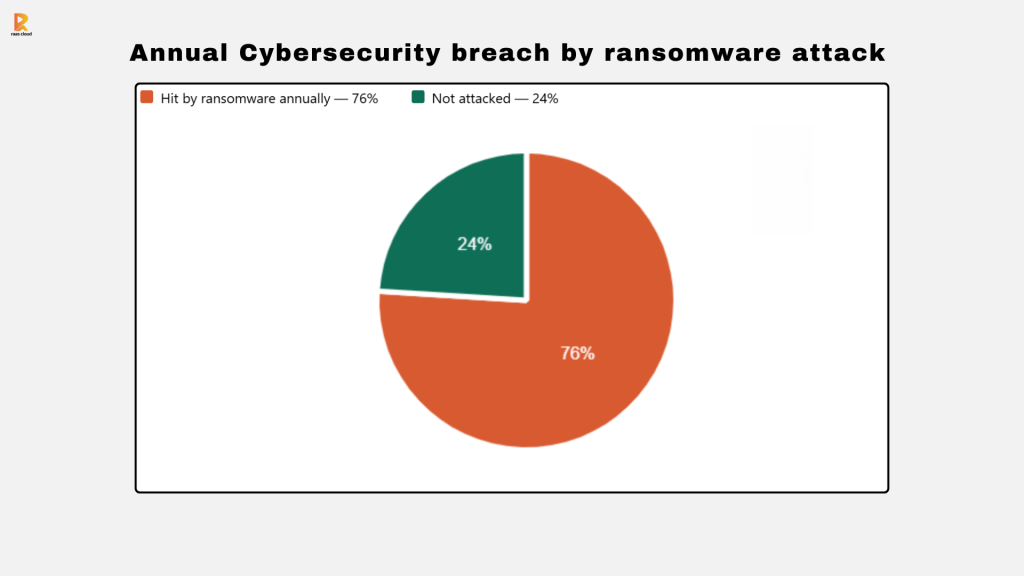
- Nearly 76% of organizations experience ransomware attacks every year across industries.
- Around 96% of ransomware attacks now target backup repositories to block data recovery efforts.
- AI-generated content now appears in nearly 80% of phishing attacks, making scams harder to detect.
- Cybercriminals send almost 3.4 billion phishing and spam emails every day worldwide.
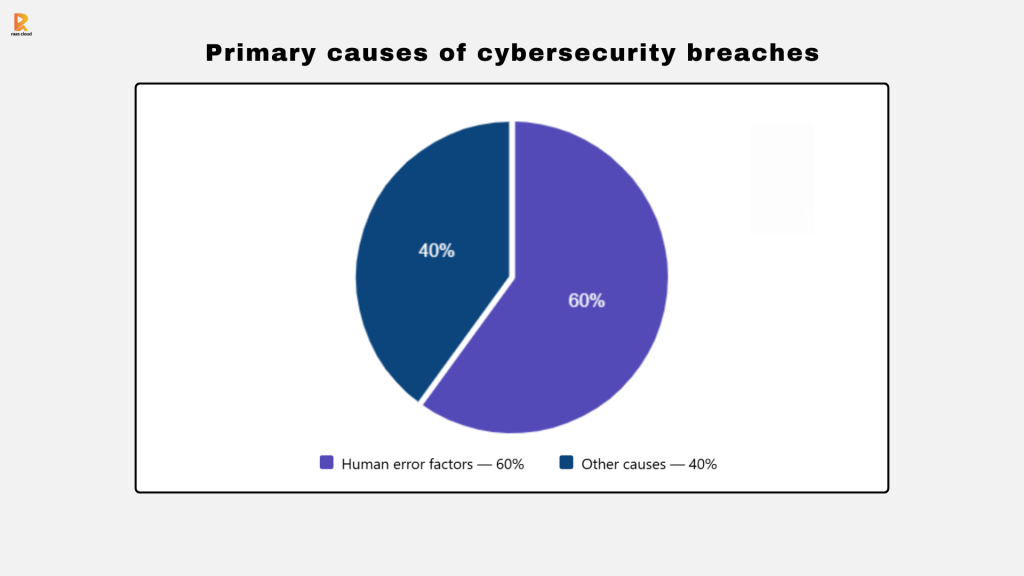
- Human mistakes, phishing clicks, password misuse, and system misconfigurations contribute to nearly 60% of cybersecurity breaches.
- AI-enabled cyberattacks increased by around 47% globally during 2025 as attackers adopted automated tools and deepfake technologies.
- Small and medium businesses now face cyberattacks nearly every 11 seconds across the world.
Here are the relevant solutions we offer at RAAS Cloud:
- Data Consulting and Data Analytics Services (60+ Projects)
- Outsource Data Mining Services
- Application Modernization Services (95% Client Satisfaction)
Global Cybercrime and Economic Impact Statistics
Cybercrime continues to create major financial losses for businesses across the world. Companies now spend more money on cybersecurity tools, breach recovery, cyber insurance, and threat monitoring systems. Recent reports also show that cyberattacks continue to increase every year as attackers use automation and AI-powered techniques.
- Global cybercrime damages could reach nearly $10.5 trillion in 2026, making cybercrime one of the costliest threats for businesses and governments worldwide.
- Experts predict that yearly cybercrime losses may grow to around $13.82 trillion by 2028 as cyberattacks continue to increase across industries.
- Worldwide cybersecurity spending may rise to nearly $183.9 billion in 2026 as organizations continue investing in protection, detection, and recovery systems.
- During fiscal year 2025, Microsoft earned almost $37 billion from cybersecurity-related products and services, showing the growing market demand for enterprise security solutions.
- Businesses now face an average of 2,090 cyberattacks every week, according to recent cybersecurity reports.
- Global cyberattack activity increased by nearly 17% compared to the previous year as attackers continue scaling automated attacks.
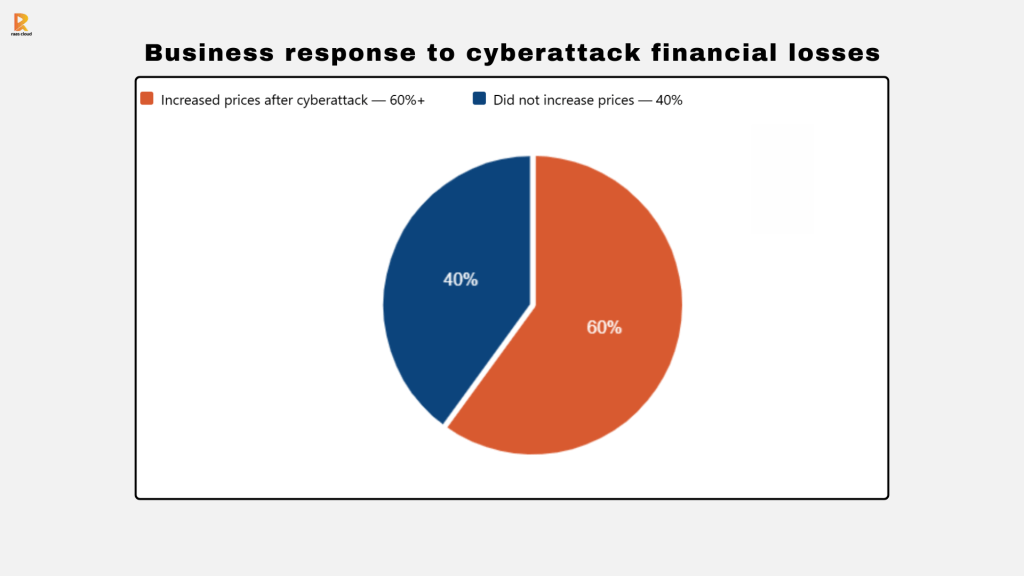
- More than 60% of businesses increased their prices after cyberattacks to recover financial losses linked to recovery costs and operational downtime.
- Around 34% of business owners now consider cyber threats a bigger business risk than natural disasters and economic disruption.
Data Breach Cost and Detection Statistics
Data breaches continue to create serious financial and operational damage for businesses worldwide. Many organizations still take months to detect and contain cyber incidents, which increases recovery costs and business downtime.
- The average global cost of a data breach reached nearly $4.88 million, making breaches one of the most expensive cybersecurity incidents for businesses.
- Organizations now require an average of 277 days to identify and fully contain cybersecurity breaches and attacks.
- Companies that detect breaches within 200 days save nearly $1 million compared to organizations with slower response times.
- AI-powered cybersecurity platforms identify and contain threats around 108 days faster than traditional security systems.
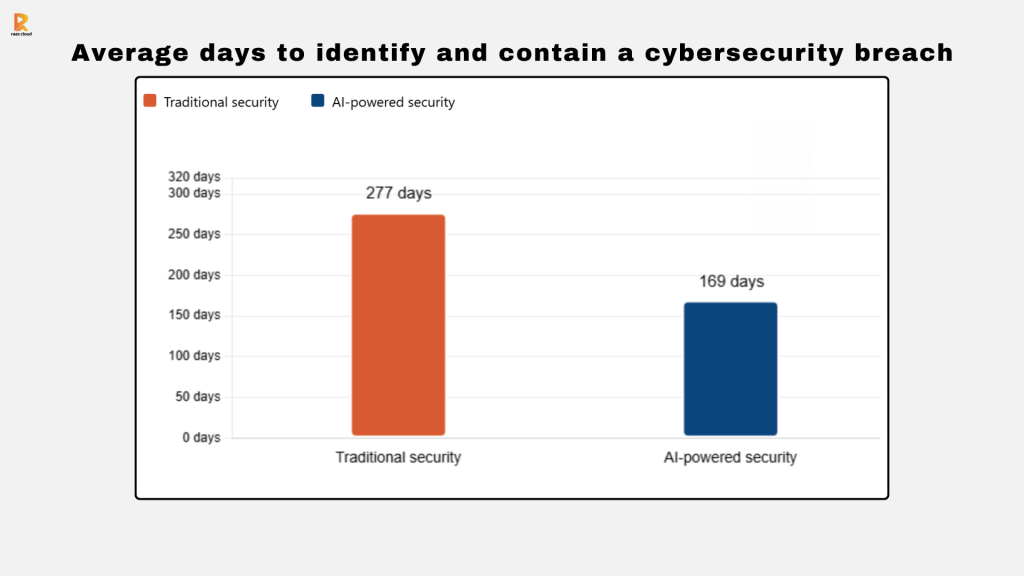
- Faster AI-based threat detection helps businesses reduce breach-related losses by nearly $1.8 million per incident.
- Personal customer information appears in nearly 53% of all breach incidents, including phone numbers, addresses, and email details.
- Around 89% of insider-related breach incidents expose highly sensitive personal information instead of basic metadata alone.
Industry-Wise Data Breach Statistics
Cybersecurity breach costs vary heavily across industries because every sector handles different types of sensitive data and systems. Healthcare, banking, manufacturing, retail, and education organizations continue to face rising cyber risks in 2026. Mobile device attacks also increased sharply across critical industries during the past year.
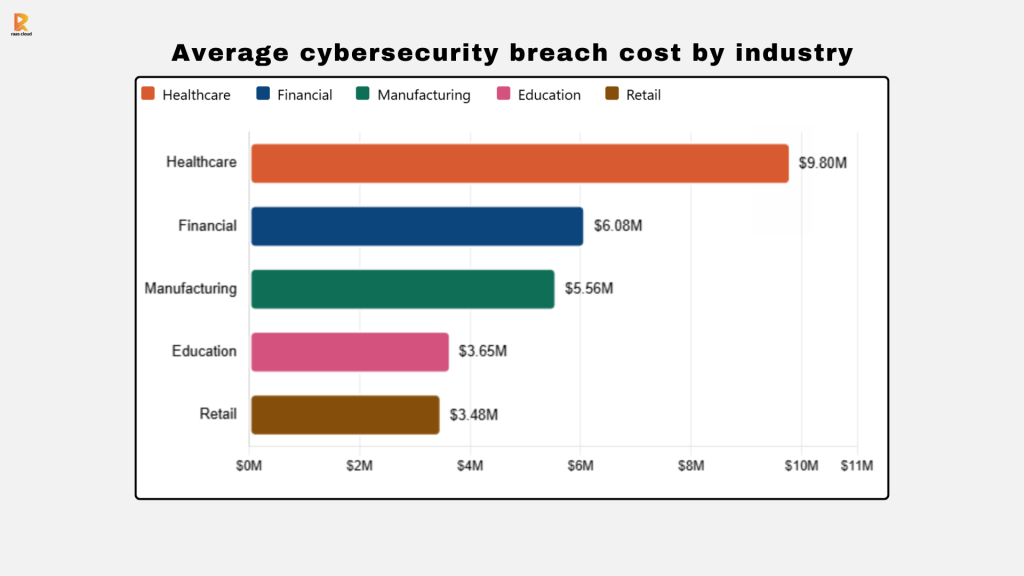
- Healthcare organizations face the highest average breach cost at nearly $9.80 million per incident.
- Financial companies lose around $6.08 million on average for every cybersecurity breach.
- Manufacturing sector breaches now cost businesses nearly $5.56 million per attack.
- Retail companies experience an average breach cost of approximately $3.48 million.
- Data breaches in the education sector cost organizations around $3.65 million on average.
- Financial firms spend nearly 22% more than the global average when responding to cybersecurity breaches.
- Mobile cyberattacks targeting the healthcare industry increased by nearly 224% over the past year.
- The energy sector recorded a massive 387% growth in mobile device related cyber threats.
Regional Cybersecurity Statistics
Cybersecurity threats continue to grow across every major region in the world. Some countries face higher breach costs because of advanced digital systems, financial networks, and critical infrastructure. AI-powered attacks also increased rapidly across regions such as North America, Europe, Asia Pacific, and the Middle East during 2025.
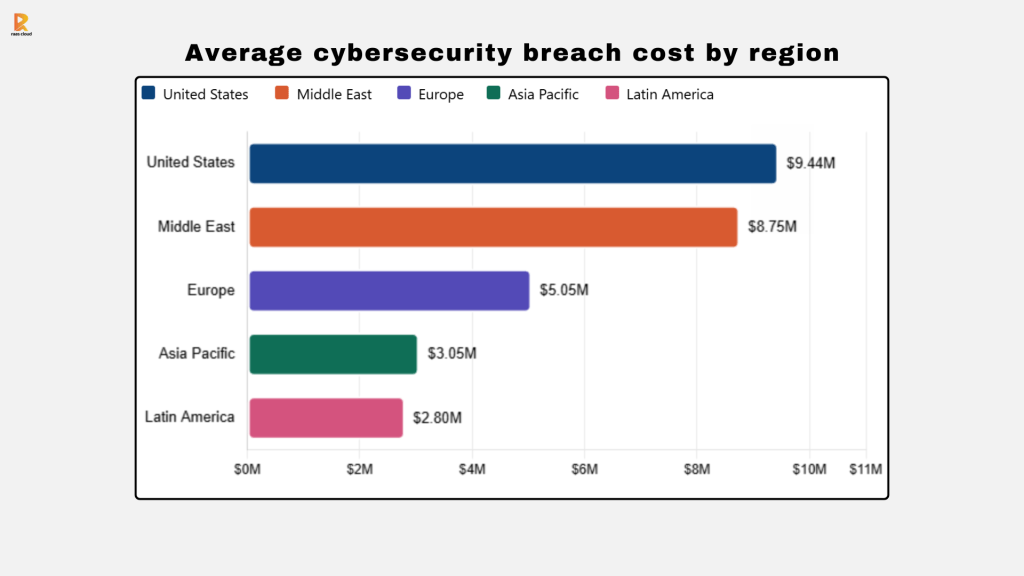
- Organizations in the United States now face an average data breach cost of nearly $9.44 million per incident, making it one of the costliest regions for cyberattacks.
- Businesses across the Middle East report average cybersecurity breach losses of around $8.75 million due to rising attacks on energy, finance, and government sectors.
- European companies experience an average breach cost of approximately $5.05 million as data privacy and compliance requirements continue to increase recovery expenses.
- Cybersecurity incidents in the Asia Pacific region now cost businesses around $3.05 million on average for every breach.
- Latin American organizations face average breach-related losses of nearly $2.80 million, which remains lower than in North America and Europe but continues to grow yearly.
- Nearly 39% of all AI-driven cyberattacks reported globally during 2025 targeted businesses and organizations located in North America.
- Europe accounted for around 28% of AI-related cybersecurity breach incidents in 2025, with Germany and the United Kingdom facing some of the highest attack activity.
- AI-enabled cyberattacks across the Asia Pacific region increased by nearly 56% during 2025 as financial and ecommerce platforms became major targets.
- India experienced around 71% growth in AI-generated phishing attacks, especially against digital banking and online payment users.
- Australia and New Zealand reported almost double the number of AI related cybersecurity threats in 2025 compared to previous years.
Ransomware Attack Statistics and Trends
Cybersecurity ransomware attacks continue to create major disruption for businesses, hospitals, financial companies, and government organizations. Attackers now target backup systems, steal sensitive data, and demand larger ransom payments to increase pressure on victims.
- Around 76% of organizations worldwide experience at least one ransomware attack every year, showing how common these attacks have become.
- Global ransomware activity increased by nearly 48% over the past year as attackers continue automating large scale campaigns.
- Nearly 96% of ransomware attacks now target backup repositories because attackers want to block businesses from restoring their data.
- About 76% of ransomware attempts against backup systems successfully compromise or damage backup files.
- Only around 4% of companies that pay ransomware demands fully recover all of their stolen or encrypted data.
- Nearly 97% of organizations recover at least some data after ransomware incidents, although many still suffer major operational losses.
- Exploited software vulnerabilities cause around 32% of ransomware infections as attackers continue targeting outdated systems.
- Compromised usernames and passwords contribute to nearly 29% of ransomware attacks across businesses.
- Phishing emails and social engineering tactics now account for roughly 20% of ransomware entry methods.
Phishing and Social Engineering Attack Statistics
Phishing and social engineering attacks continue to target businesses and individuals across email, mobile devices, websites, and messaging platforms. Attackers now use AI generated content, fake login pages, and impersonation techniques to steal passwords and sensitive information. Human mistakes also remain one of the biggest reasons behind successful cyberattacks.
- Stolen usernames and passwords now contribute to nearly 31% of all cybersecurity breach incidents worldwide.
- Around 16% of recorded data breaches begin through phishing attacks that trick users into sharing sensitive information.
- Cybercriminals send nearly 3.4 billion spam emails every day, making phishing one of the most common cybercrime methods.
- More than two-thirds of mobile phishing attacks now happen through smishing scams that use fake SMS messages and mobile links.
- Email-based attacks account for nearly 82% of malicious file delivery methods used by cybercriminals.
- Web-based attack methods represent around 18% of cyberattack activity across businesses and organizations.
- Nearly 53% of businesses report receiving phishing emails or scam text messages targeting employees and systems.
- Around 31% of organizations admit that employees remain vulnerable to phishing and social engineering attacks.
- Human mistakes such as sending information to the wrong person contribute to nearly 45% of misdelivery-related security incidents.
- Poor password practices, misconfigurations, phishing clicks, and employee mistakes together cause nearly 60% of all cybersecurity breaches.
AI Cybersecurity Threat Statistics
Artificial intelligence is changing how cyberattacks happen across businesses and online platforms. Attackers now use AI tools to create phishing emails, deepfake videos, fake voices, and automated scams at a much larger scale. Security teams also struggle to detect AI-generated attacks because they look more realistic than traditional threats.
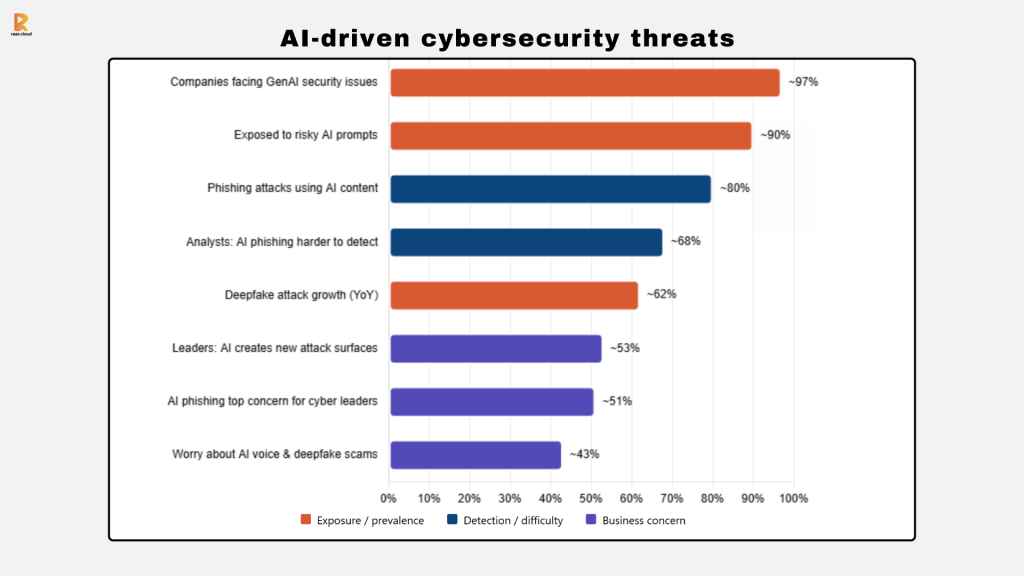
- Nearly 97% of companies report facing security issues connected to generative AI tools and AI-powered systems.
- Around 80% of phishing attacks now use AI-generated content to create more realistic scam emails and fake messages.
- About 68% of cyber threat analysts say AI-generated phishing attacks became harder to detect in 2025 than in previous years.
- Deepfake and synthetic media-related attacks grew by around 62% year over year across businesses and enterprise systems.
- Nearly 90% of organizations report exposure to risky AI prompts and unsafe AI-generated content activity.
- Around 53% of business leaders believe artificial intelligence creates new cybersecurity attack surfaces that companies are not fully prepared for.
- AI-generated phishing attacks remain the top concern for nearly 51% of cybersecurity leaders and executives.
- Around 43% of organizations worry about AI-powered voice scams and deepfake vishing attacks targeting employees and customers.
AI in Cybersecurity Defense Statistics
Businesses now use artificial intelligence to improve threat detection, automate security tasks, and respond to cyberattacks faster. Security teams also rely on AI tools to reduce manual workload, detect unusual behaviour, and improve incident response systems. Organizations believe AI can help solve cybersecurity workforce shortages and alert fatigue problems.
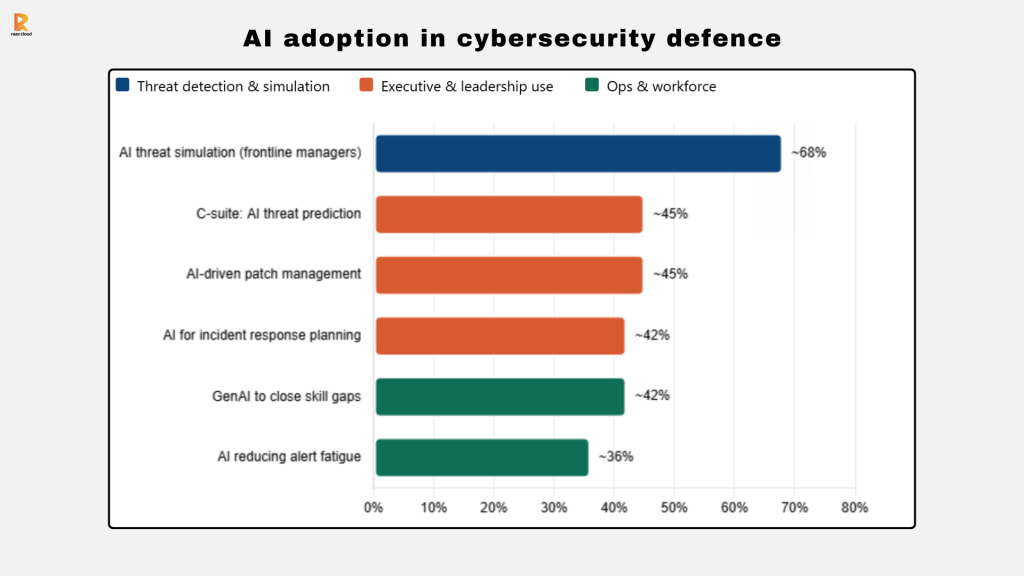
- AI tools now help nearly 45% of C-suite leaders predict cybersecurity threats and vulnerabilities before attacks happen.
- Another 45% of executives use artificial intelligence systems to improve the speed and scale of security patch management across infrastructure and applications.
- AI-driven threat simulation tools support nearly 68% of frontline cybersecurity managers in improving attack readiness and response efficiency.
- Faster incident response planning has become a major AI use case, with around 42% of business leaders relying on AI-powered systems for response preparation.
- About 39% of organizations now use AI-based threat simulations to test how systems react during cybersecurity attacks.
- Large volumes of security alerts continue to overwhelm teams, and nearly 36% of cybersecurity departments now use AI tools to reduce alert fatigue.
- Workforce shortages remain a major challenge, which is why around 42% of organizations use generative AI to reduce cybersecurity skill gaps.
- Nearly 37% of companies automate SIEM and security event management systems using AI-powered cybersecurity platforms.
- Generative AI solutions already support understaffed cybersecurity teams in around 41% of businesses worldwide.
- SMB cybersecurity investments continue to rise, and nearly 39% of small businesses plan to adopt AI-driven threat detection systems during 2026.
Small Business Cybersecurity Statistics
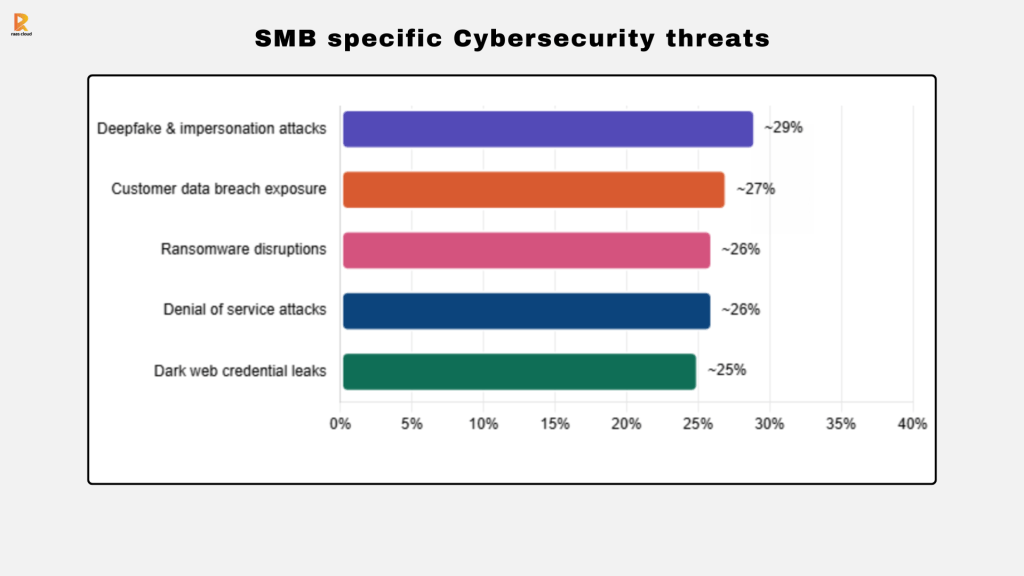
Small and medium-sized businesses continue to face growing cybersecurity risks because many lack dedicated security teams and advanced protection systems. Attackers often target SMBs through phishing emails, ransomware, credential theft, and deepfake scams.
- Cyberattacks affected nearly 46% of small and medium-sized businesses during 2025 across different industries.
- SMB focused cybersecurity incidents now occur almost every 11 seconds as attackers continue targeting smaller businesses with weaker protection systems.
- Recovery costs after cybersecurity incidents range from around $826 to more than $653,000 for small businesses depending on attack severity.
- Deepfake scams and impersonation attacks impacted nearly 29% of SMBs during the past year.
- Customer information exposure remains a major issue, and around 27% of small businesses experienced data breaches involving sensitive customer records.
- Nearly 26% of SMBs faced ransomware attacks that disrupted operations, systems, or stored business data.
- Denial of service attacks also affected around 26% of small businesses by disrupting websites, applications, and online services.
- Leaked passwords and stolen credentials on dark web platforms increase cybersecurity risks for roughly 25% of SMB owners.
- Many organizations still manage cybersecurity internally, with around 84% of business owners handling protection systems without outside security providers.
- Even businesses with cybersecurity specialists continue relying on internal teams, as more than 54% of SMBs manage most security operations themselves.
Remote Work and Cybersecurity Skills Gap Statistics
Remote and hybrid work models continue to increase cybersecurity risks for businesses across industries. Companies now manage employee devices, cloud platforms, third-party apps, and home networks at the same time.
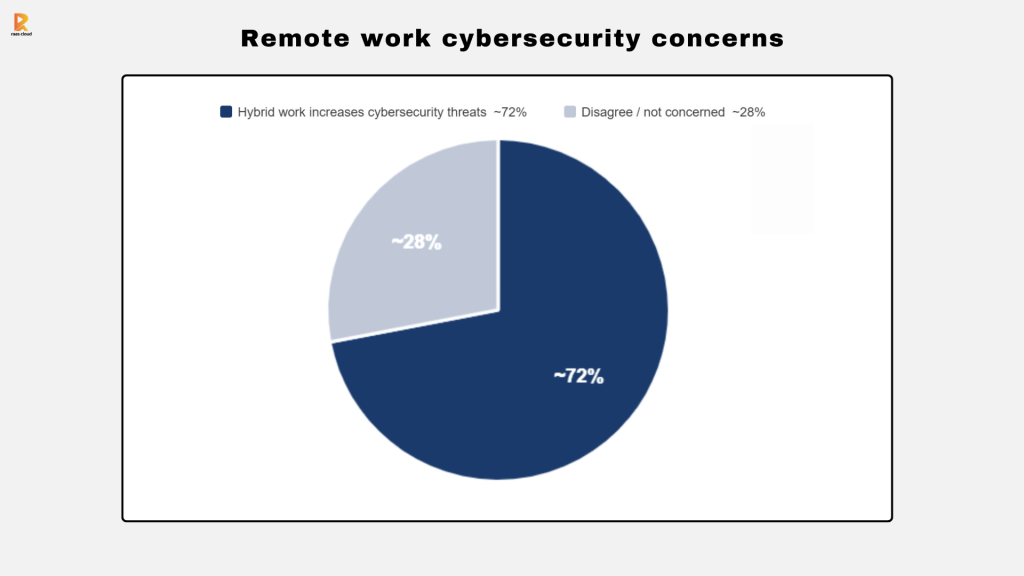
- Business owners remain highly concerned about remote work security risks, with nearly 72% saying hybrid work environments increase cybersecurity threats.
- Cybersecurity skill shortages continue to create pressure for businesses, and nearly 45% of professionals say talent gaps remain their biggest challenge.
- Deepfake-related scams and impersonation attacks also remain a growing concern, with nearly 31% of organizations saying they are not fully prepared for such threats.
- Around 74% of organizations believe their current cybersecurity systems can detect and respond to attacks in real time.
- Confidence levels remain much higher among executives, as nearly 81% of C suite leaders believe their companies are prepared for cyber threats.
- Frontline managers show lower confidence in cybersecurity readiness, with only 66% saying their organizations can handle attacks effectively.
- Many security teams still feel unprepared for ransomware incidents, with around 46% of leaders admitting concerns about handling such attacks.
- Phishing and social engineering continue to trouble organizations, as nearly 39% of businesses say these attacks remain difficult to stop completely.
- Supply chain cybersecurity risks continue to rise, and about 36% of companies worry about ransomware spreading through third party vendors.
Insider Threat and Cybersecurity Reporting Statistics
Employee mistakes, insider threats, and delayed incident reporting continue to create serious cybersecurity risks for organizations. Businesses now focus more on employee awareness training, internal monitoring, and zero-trust security systems to reduce these risks. Companies also struggle with third party vendor security and underreporting of cyber incidents.
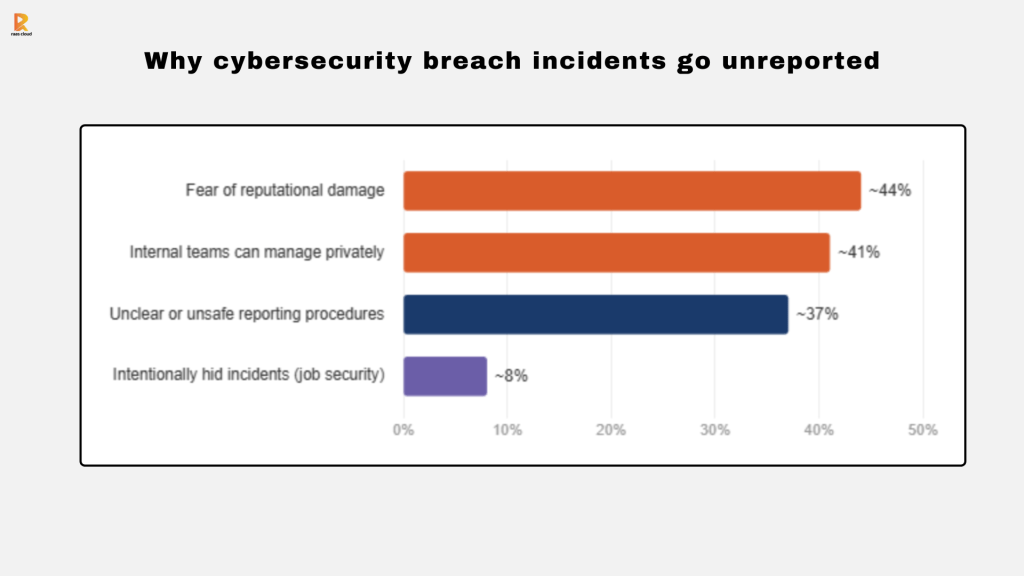
- Fear of reputational damage prevents many businesses from reporting cyber incidents, with nearly 44% of leaders citing this as a major concern.
- About 41% of organizations avoid reporting cybersecurity incidents because they believe internal teams can manage the situation privately.
- Nearly 37% of businesses say unclear or unsafe reporting procedures stop employees from reporting cyber incidents quickly.
- Job security concerns also affect transparency, and around 8% of cybersecurity leaders admit they or teammates intentionally hid incidents.
- Some cyber incidents never reach executive leadership, with nearly 30% of businesses saying multiple attacks went unreported during the past year.
- Vendor-related security issues continue to increase, and around 55% of companies experienced third party outages or security disruptions in the last year.
- Nearly 1 in 5 businesses assume vendors are secure simply because they work with trusted brands or signed contracts.
- Zero trust security adoption continues to grow rapidly, with more than 86% of organizations implementing identity-focused security models.
- Cyber insurance adoption still remains incomplete, as only around 74% of companies currently carry cybersecurity insurance coverage.
- Around 53% of companies now actively train employees to reduce insider threats and improve safe security behaviour inside organizations.
Explore more insights
- 70+ AI Coding Statistics 2026 (High Adoption & Low Trust)
- 70+ Latest Generative AI Statistics For 2026
- 100+ Latest AWS Statistics That are Relevant For 2026
Secure Your Cloud and DevOps Infrastructure with RAAS Cloud
Cybersecurity threats continue to grow every year as businesses become more dependent on cloud systems, remote work, artificial intelligence, and connected digital platforms. Ransomware attacks, phishing scams, AI generated threats, insider risks, and large scale data breaches now affect companies across every industry. Businesses that invest in stronger security systems, faster threat detection, cloud protection, and automated security operations will stay better prepared against modern cyber threats.
For businesses looking to strengthen cloud security and secure software delivery, RAAS Cloud provides scalable solutions through its Cloud Services and Solutions and DevOps Consulting and Implementation Services.
Their services include cloud migration, cloud security, hybrid and multi-cloud infrastructure, DevOps automation, CI/CD pipelines, backup systems, infrastructure optimization, monitoring, and secure cloud application development across AWS, Azure, and hybrid cloud platforms.
Founded in 2023, RAAS Cloud has completed 60+ projects with a team of 50+ skilled professionals while maintaining 95% client satisfaction across global engagements. The company supports businesses across healthcare, banking, fintech, retail, education, and other industries with cloud transformation and software development solutions.
Data Sources
- https://ordr.net/blog/cybersecurity-statistics-2026-report
- https://www.ibm.com/reports/data-breach
- https://www.verizon.com/business/resources/reports/dbir.html
- https://www.statista.com/forecasts/1280009/cost-cybercrime-worldwide/
- https://www.mckinsey.com/capabilities/risk-and-resilience/our-insights/the-cybersecurity-providers-next-opportunity-making-ai-safer
- https://www.investing.com/analysis/microsoft-why-its-security-business-rivals-crowdstrike-and-palo-alto-200665840
- https://cybersecurityventures.com/official-2026-cybersecurity-market-report-predictions-and-statistics/
- https://www.sentinelone.com/cybersecurity-101/cybersecurity/data-breach-statistics/
- https://www.verizon.com/business/resources/infographics/2025-dbir-infographic.pdf
- https://www.sophos.com/en-us/content/state-of-ransomware
- https://app.stationx.net/articles/ransomware-statistics
- https://www.statista.com/chart/28878/expected-cost-of-cybercrime-until-2027/
- https://www.fbi.gov/news/press-releases/fbi-releases-annual-internet-crime-report
- https://zimperium.com/hubfs/Reports/2025%20Global%20Mobile%20Threat%20Report.pdf
- https://www.hipaajournal.com/healthcare-224-annual-increase-attacks-targeting-mobile-devices/
- https://www.checkpoint.com/security-report/
- https://sqmagazine.co.uk/ai-cyber-attacks-statistics/
- https://www.mckinsey.com/about-us/new-at-mckinsey-blog/ai-is-the-greatest-threat-and-defense-in-cybersecurity-today
- https://reports.weforum.org/docs/WEF_Global_Cybersecurity_Outlook_2025.pdf
- https://www.statista.com/topics/12001/artificial-intelligence-ai-in-cybersecurity/
- https://www.statista.com/statistics/1384003/cybersecurity-concern-level-in-remote-work/
- https://www.vikingcloud.com/resources/the-high-risk-cybersecurity-disconnect-c-suite-cyber-leaders-vs-frontline-managers
- https://www.vikingcloud.com/blog/cybersecurity-statistics
- https://www.vikingcloud.com/resources/the-2025-cyber-threat-landscape-report-cyber-risks-opportunities-resilience
- https://www.securonix.com/wp-content/uploads/2024/01/2024-Insider-Threat-Report-Securonix-final.pdf
- https://www.cisco.com/c/en/us/products/security/zero-trust-outcomes-report.html
- https://commercial.allianz.com/news-and-insights/expert-risk-articles/allianz-risk-barometer-2023-cyber-incidents.html
- http://www.vikingcloud.com/resources/the-2026-smb-threat-landscape-report-the-year-cybersecurity-risks-surpass-economic-concerns
- https://www.statista.com/statistics/1172646/worldwide-cybersecurity-workforce-gap-region/
- https://www.cdnetworks.com/blog/cloud-security/cybersecurity-statistics-and-trends-2026/
- https://www.totalassure.com/blog/cyber-attacks-on-small-businesses-statistics-2025
- https://www.getastra.com/blog/security-audit/small-business-cyber-attack-statistics/

Dhanalakshmi Kadirvelu is a Business Intelligence and Data Analytics expert with a strong focus on software development and data engineering. She creates efficient data models, builds interactive dashboards, and integrates analytics into software systems using Power BI, OBIEE, and SQL. Her work helps development teams use data effectively to create smarter software solutions and improve business performance.