

Online shopping keeps growing every year, and mobile apps now drive a major part of that growth. Businesses no longer depend only on websites to sell products. Many brands now invest in ecommerce apps to improve conversions, increase repeat purchases, and give users a faster shopping experience.
Recent data shows that mobile commerce sales continue to rise worldwide, while shopping apps outperform mobile websites in engagement and conversion rates.
AI powered recommendations, personalized shopping, push notifications, and faster checkout systems now play a major role in modern ecommerce app development.
This listicle roundup shares the latest ecommerce app development statistics for 2026. We curated these statistics and insights from industry reports, market research studies, ecommerce benchmark reports, business case studies, and trusted analytics platforms.
💡 Note: All references are attached at the end of the article for readers who want deeper insights and further research.
Key Ecommerce App Development Statistics 2026
- Global ecommerce sales reached nearly $7.4 trillion in 2025.
- Mobile devices now generate around 77% of ecommerce traffic worldwide.
- Mobile commerce sales could reach $3.35 trillion by 2028.
- Ecommerce apps generated nearly $3.88 trillion in revenue during 2023.
- Ecommerce apps can deliver conversion rates nearly 3x higher than mobile websites.
- Customers browse 4.2x more products inside ecommerce apps than on mobile websites.
- Ecommerce apps can reduce cart abandonment rates from 85.65% to nearly 20%.
- Around 78% to 81% of shoppers now expect personalized shopping experiences.
- AI powered recommendation systems can improve ecommerce conversions by 15% to 20%.
- Amazon now generates more than 60% of its online sales through its mobile app.
Ecommerce Market Growth Statistics
The global ecommerce industry continues to grow at a fast pace, and mobile shopping plays a major role in that expansion. More businesses now invest in ecommerce platforms, shopping apps, digital payment systems, and AI powered customer experiences to meet changing customer expectations.
- Global ecommerce sales reached nearly $7.4 trillion in 2025, showing how quickly online shopping continues to expand across international markets.
- Industry reports suggest that ecommerce businesses may grow at an annual rate of 14.5% between 2022 and 2026, which is much faster than traditional retail growth.
- The number of ecommerce stores worldwide has already crossed 28 million, reflects the rising demand for online selling platforms and shopping applications.
- E-commerce apps generated nearly $3.88 trillion in revenue during 2023, reflecting the strong commercial value of mobile shopping platforms
- E-commerce sales in the United States alone may cross $1.38 trillion in 2025, making it one of the largest online retail markets in the world.
- The UK social commerce market may grow to nearly £8.8 billion within the next five years as more users shop directly through social media platforms and mobile apps.
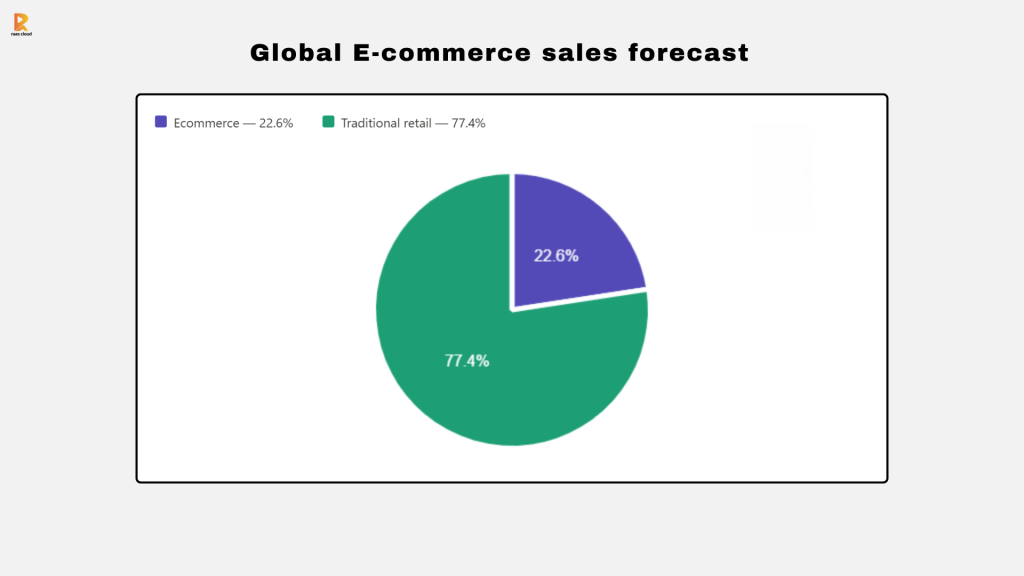
- Around 21% of all retail purchases may happen online in 2025, showing how customers increasingly prefer digital shopping experiences.
Mobile Commerce and Ecommerce App Adoption Statistics
Mobile devices now shape how people browse products, compare prices, and complete purchases online. Customers expect fast loading apps, smooth checkout experiences, and personalized recommendations directly from their smartphones. Because of this shift, businesses continue to invest heavily in ecommerce app development.
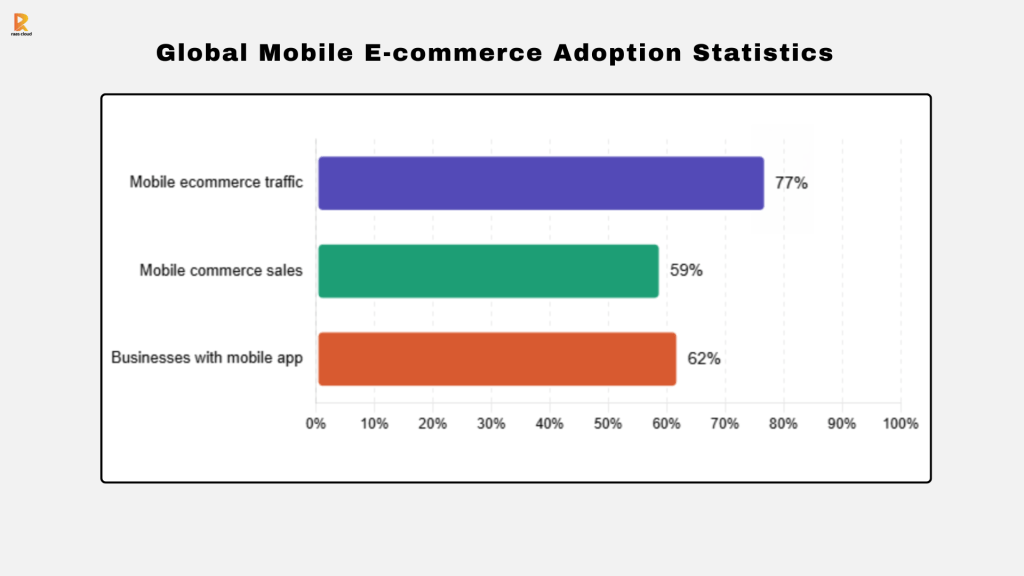
- Mobile users already contribute around 77% of ecommerce traffic worldwide, making mobile optimization a critical part of ecommerce app development.
- Global mobile commerce sales may reach about $3.35 trillion by 2028 as more consumers continue shopping through mobile apps and digital marketplaces.
- Mobile commerce currently contributes nearly 59% of worldwide ecommerce sales, showing how mobile shopping now dominates digital retail activity.
- Around 62% of businesses either already have a mobile app or actively work on ecommerce app development projects to improve customer engagement and sales.
- More than half of mobile commerce transactions now happen directly inside shopping apps instead of mobile browsers, showing that users increasingly prefer app based shopping experiences.
Ecommerce App Performance and Conversion Statistics
Ecommerce apps often perform better than mobile websites because they offer faster navigation, smoother checkout experiences, personalized recommendations, and easier access to products. Many brands now focus on app optimization because even small improvements in speed and user experience can increase conversions and revenue.
- Ecommerce apps can generate conversion rates that are nearly three times higher than mobile websites, highlighting the growing preference for faster and smoother app based shopping experiences.
- Customers browse nearly 4.2 times more products during each session inside ecommerce apps than they do on mobile websites, reflecting stronger engagement levels in app based shopping environments.
- Shopping apps often produce around 15% higher average order values compared to mobile websites because users spend more time exploring products inside apps.
- Businesses that improve product checkout experiences can increase conversions by nearly 35%, making checkout optimization one of the most valuable ecommerce app features.
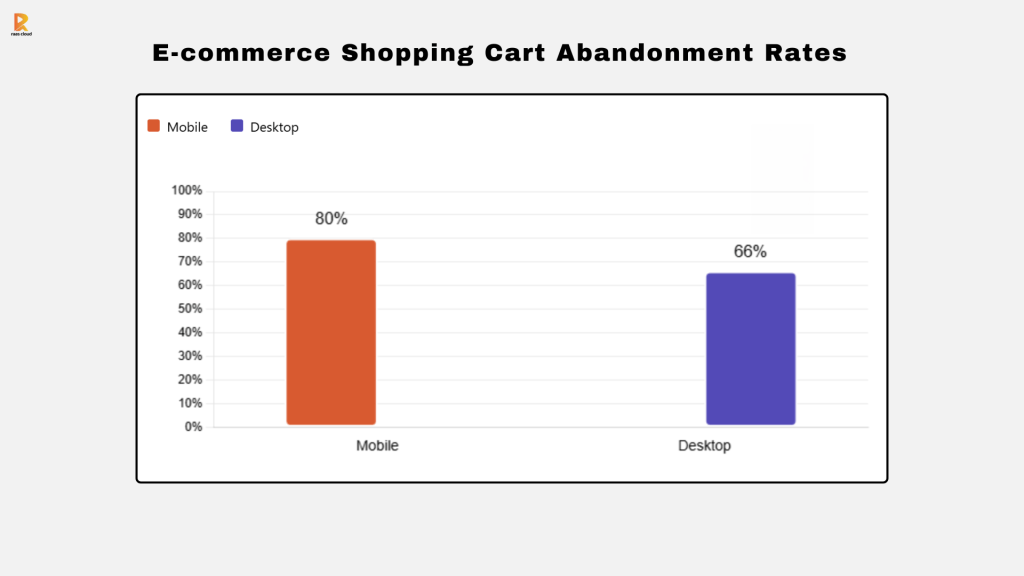
- Mobile shopping carts face abandonment rates around 80%, compared to 66% on desktop devices, highlighting the growing need for optimized mobile shopping experiences.
- Leading ecommerce stores often achieve conversion rates between 5% and 8% by focusing on faster load times, better user experience, and smoother checkout systems.
- Around half of online shoppers leave their carts when checkout takes longer than 30 seconds, making app speed and checkout performance critical for ecommerce conversions.
- Research also found that app users can view up to 286% more products per session compared to mobile web users, indicating higher customer interaction inside ecommerce apps.
User Behavior and Customer Experience Statistics
Customer expectations continue to change as mobile shopping becomes more common. Modern users want fast support, personalized recommendations, localized experiences, and simple checkout systems. Businesses that fail to meet these expectations often struggle with low engagement and weaker retention rates.
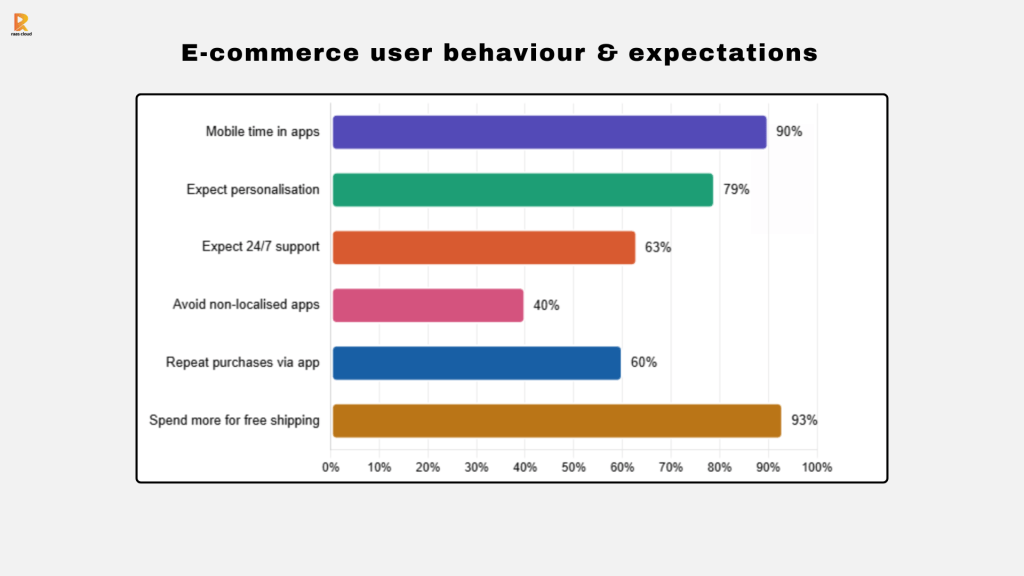
- Smartphone users now spend more than 90% of their mobile time inside apps instead of browsers, which explains why ecommerce brands continue investing in mobile app experiences.
- Around 78 to 81% of shoppers expect personalized shopping experiences that match their interests, browsing history, and buying behavior.
- About 63% of customers now expect continuous support availability when they shop online, which increases demand for chat systems and AI-powered customer support.
- Nearly 40% of users avoid buying from ecommerce platforms that do not support their preferred language, showing the importance of localization in ecommerce app development.
- Mobile apps also improve repeat purchases because nearly 60% of users return to buy again from platforms that offer dedicated shopping apps.
- Free shipping continues to influence online shopping behaviour strongly, as around 93% of customers tend to spend more when businesses offer shipping incentives.
AI and Personalization in Ecommerce Apps
AI now plays a major role in ecommerce app development. Businesses use AI powered tools to improve product recommendations, automate customer support, personalize shopping experiences, and increase conversions. Many ecommerce brands also use AI to reduce operational costs and improve customer engagement across mobile apps.
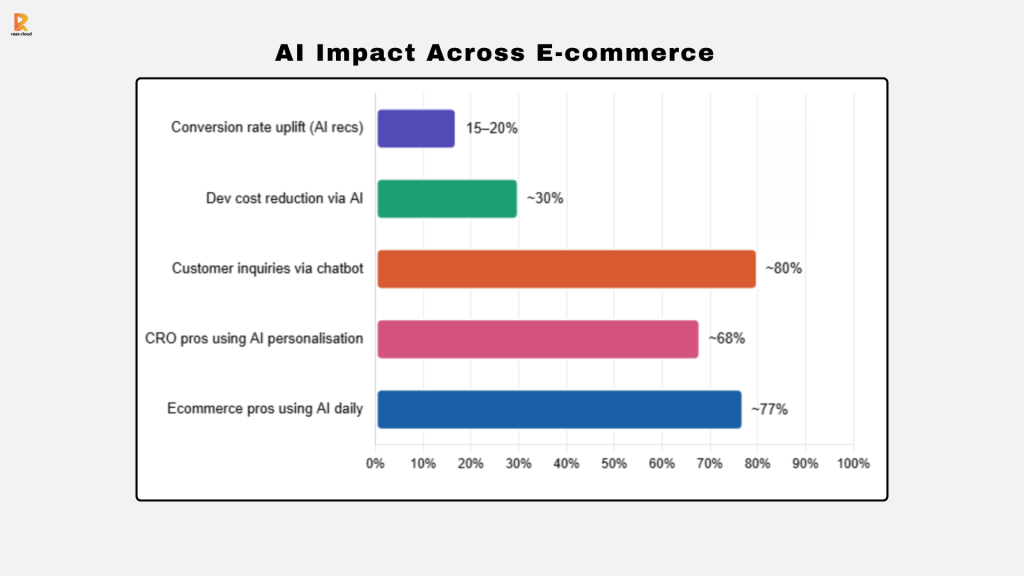
- AI powered recommendation systems can improve ecommerce conversion rates by nearly 15% to 20%, which makes personalization one of the most valuable ecommerce app features today.
- Businesses using AI in app development can reduce development costs by nearly 30% through automation, faster workflows, and improved operational efficiency.
- AI chatbots now handle nearly 80% of customer inquiries, helping ecommerce businesses provide faster support and reduce manual workloads.
- Around 68% of conversion rate optimization professionals already use AI powered personalization tools to improve customer engagement and sales performance.
- Research shows that nearly 77% of ecommerce professionals now use AI tools daily in 2025, reflecting how quickly AI adoption continues to grow across the ecommerce industry.
Retention, Engagement, and Push Notification Statistics
Building an ecommerce app is only the first step. Businesses also need to keep users active and encourage repeat purchases. Features like push notifications, loyalty programs, personalized offers, and faster checkout systems help ecommerce apps improve engagement and customer retention.
- Ecommerce apps that use regular push notifications can improve retention rates by two to six times compared to apps with limited customer engagement campaigns.
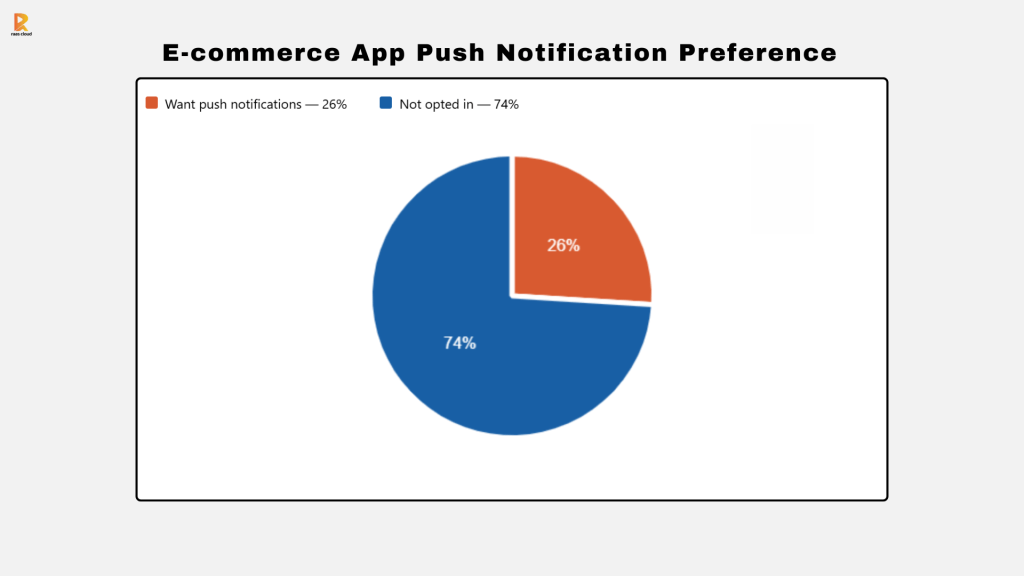
- Around 26% of ecommerce app users actively want push notifications for offers, delivery tracking, discounts, and product launches.
- Ecommerce app retention rates have dropped to nearly 4.2%, which shows how difficult it has become for brands to keep users active for long periods.
- More than 75% of ecommerce app shopping carts get abandoned before users complete their purchases, making retention and remarketing strategies extremely important.
- Less than 8% of ecommerce app users add products to their carts during browsing sessions, highlights the importance of user experience optimization and personalized recommendations.
Payment and Digital Commerce Statistics
Payment flexibility now plays a major role in ecommerce app success. Customers expect secure transactions, fast checkout systems, digital wallets, and multiple payment options inside shopping apps. Businesses that simplify payments often improve customer trust, increase conversions, and reduce cart abandonment.
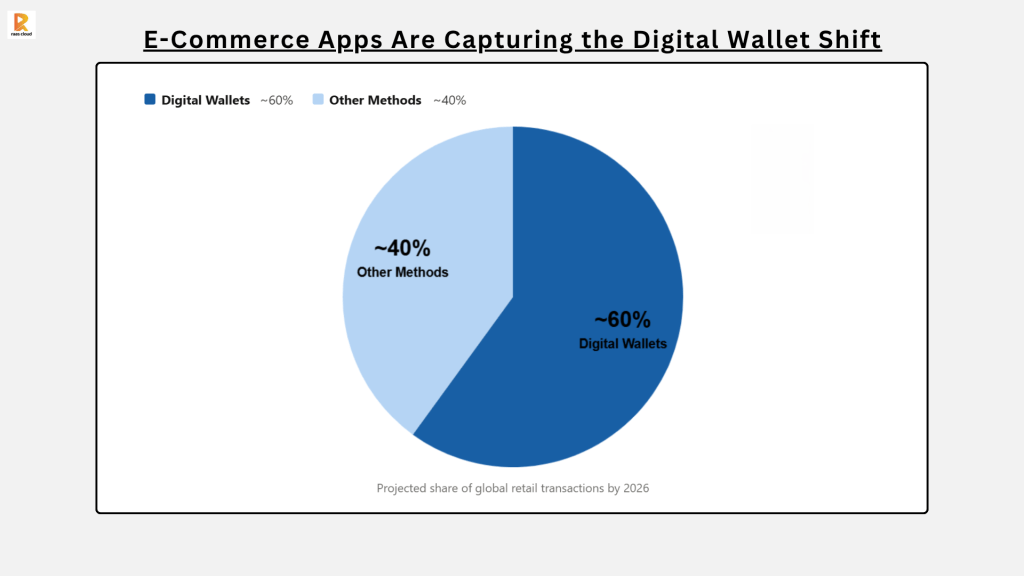
- Digital wallets may handle nearly 60% of all retail transactions by 2026 as more consumers shift toward mobile payments and contactless shopping experiences.
- The number of digital wallet users worldwide could reach around 5.2 billion by 2026, reflecting the growing demand for mobile friendly payment systems.
- Small businesses can improve revenue by nearly 30% when they offer customers multiple payment methods instead of limiting checkout options.
Ecommerce Brand Case Studies and Real World Results
Many global brands now use ecommerce apps to improve customer engagement, increase repeat purchases, and create personalized shopping experiences. Features like AI recommendations, loyalty programs, push notifications, and one tap checkout continue to drive strong business results across ecommerce apps.
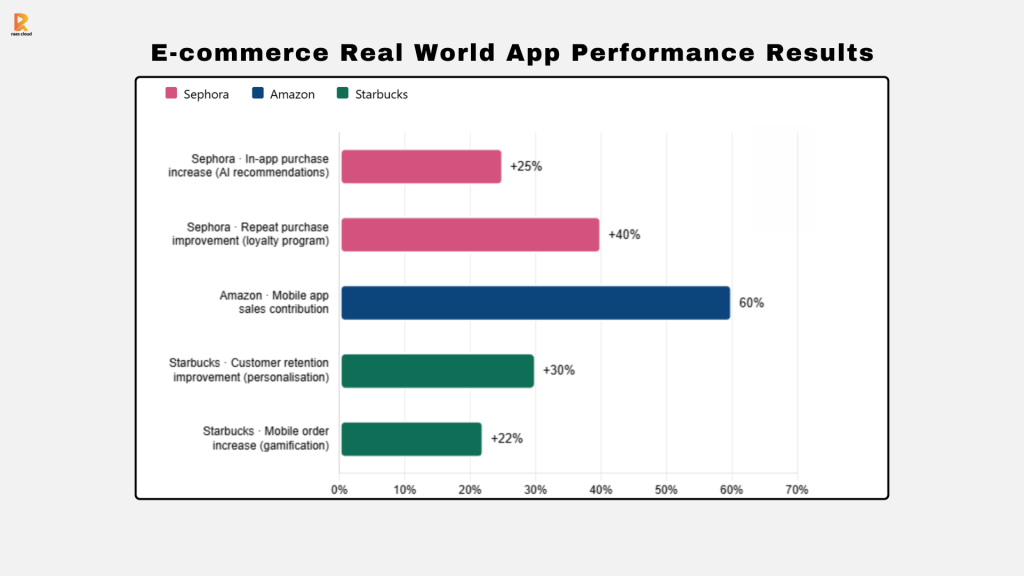
- Sephora increased in app purchases by nearly 25% after introducing AI powered recommendations and virtual try on features inside its shopping app.
- Sephora also improved repeat purchases by around 40% by integrating loyalty programs and personalized shopping experiences into its mobile app.
- Amazon generates more than 60% of its online sales through its mobile app, which uses features like one click checkout, voice search, and personalized recommendations to improve shopping convenience.
- Starbucks improved customer retention by nearly 30% through app personalization, loyalty rewards, and push notification campaigns.
- Starbucks also increased mobile orders by around 22% by adding gamification features and personalized customer experiences inside its app.
Future E-commerce App Development Trends
The e-commerce app industry continues to evolve as businesses invest more in mobile commerce, AI-powered personalisation, and immersive shopping experiences. The following statistics highlight the major e-commerce app development trends shaping 2026 and beyond.
- Mobile commerce sales could reach nearly $3.35 trillion by 2028 as more consumers continue shopping through e-commerce apps and mobile devices.
- Experts expect mobile commerce to generate nearly $745.16 billion in sales by 2030, reflecting the long-term growth of mobile-first ecommerce experiences.
- AR-powered e-commerce applications may grow at a CAGR of 25% by 2026 as brands increasingly adopt virtual product previews and immersive shopping features.
- More than half of all mobile commerce transactions now happen directly inside shopping apps instead of mobile browsers.
💡 Further Data Insights
- 50+ Cybersecurity Statistics Every Organization Must Know
- 100+ Latest AWS Statistics That are Relevant For 2026
- 70+ AI Coding Statistics 2026 (High Adoption & Low Trust)
Build High-Performing E-Commerce Apps With RAAS Cloud
The statistics shared in this article clearly show that mobile commerce, AI-powered personalisation, faster checkout systems, and app-based shopping experiences continue to shape the future of ecommerce.
Businesses that invest in ecommerce app development often achieve stronger customer engagement, better retention rates, and higher revenue growth compared to brands that rely only on traditional websites.
At RAAS Cloud, businesses get access to a dedicated ecommerce development team with 50+ skilled experts and experience across Shopify, Magento, WooCommerce, BigCommerce, React, Next.js, Node.js, Python, and custom ecommerce solutions
Whether a business wants to launch a new e-commerce app, modernize an existing online store, or improve mobile shopping performance, RAAS Cloud provides end-to-end e-commerce development solutions tailored to business goals and customer expectations.
Explore More:
- 🛍️ 10 BEST D2C eCommerce Development Companies in USA
- How Small Businesses Can Use AI Without An In-house Tech Team
- Hire Certified Magento Developers For Your Projects
Data sources
- https://www.statista.com/statistics/272391/us-retail-e-commerce-sales-forecast/
- https://www.esparkinfo.com/web-development/statistics
- https://www.forbes.com/sites/shephyken/2024/04/14/the-personalized-customer-experience-customers-want-you-to-know-them/
- https://www.statista.com/statistics/568684/e-commerce-website-visit-and-orders-by-device/
- https://www.esparkinfo.com/ecommerce/statistics
- https://www.businessofapps.com/data/amazon-statistics/
- https://www.vennapps.com/blog/35-essential-stats-on-mobile-commerce-in-2025
- https://www.businessofapps.com/data/ecommerce-app-benchmarks/
- https://searchlab.nl/en/statistics/ecommerce-statistics-2026
- https://www.ringly.io/blog/mobile-commerce-statistics-2026
- https://www.statista.com/topics/11883/mobile-commerce-worldwide/
- https://capitaloneshopping.com/research/digital-wallet-statistics/
- https://baymard.com/lists/cart-abandonment-rate
- https://www.productsup.com/blog/black-friday-cyber-monday-2025-what-this-year-results-say-about-the-future-of-shopping/
- https://www.mobiloud.com/blog/mobile-apps-vs-mobile-websites
- https://www.mobiloud.com/blog/mobile-apps-vs-mobile-websites
- https://www.businessofapps.com/data/ecommerce-app-market/
- https://digitaldefynd.com/IQ/sephora-using-ai-case-study/
- https://amzscout.net/blog/amazon-statistics.
- https://www.marketingdive.com/news/starbucks-rewards-loyalty-q3-personalization/706322/
- https://superagi.com/from-chatbots-to-personalization-leveraging-ai-for-maximum-conversion-rates-in-e-commerce-2/
- https://ecomposer.io/blogs/ecommerce/ai-in-ecommerce-statistics

Dhanalakshmi Kadirvelu is a Business Intelligence and Data Analytics expert with a strong focus on software development and data engineering. She creates efficient data models, builds interactive dashboards, and integrates analytics into software systems using Power BI, OBIEE, and SQL. Her work helps development teams use data effectively to create smarter software solutions and improve business performance.